Piotr Rawicz: Language of solitude
The name Piotr Rawicz is little known today, yet he is an essential author in Holocaust literature. Born in 1919 in Lwów (today’s Lviv) into a Jewish family, he survived Auschwitz-Birkenau. After the war, he settled in Paris, working in publishing and journalism. His award-winning autobiographical novel Blood from the Sky (1961) is a meditation on solitude, blending extreme despair with eclectic philosophy. Parts of his life remained shrouded in mystery, even as he sought to find language for what words alone cannot convey.
Piotr Rawicz tells of the solitude of the individual – a solitude so deep that not even solitude is there to keep him company.
Hélène Cixous in Le Monde, 1969
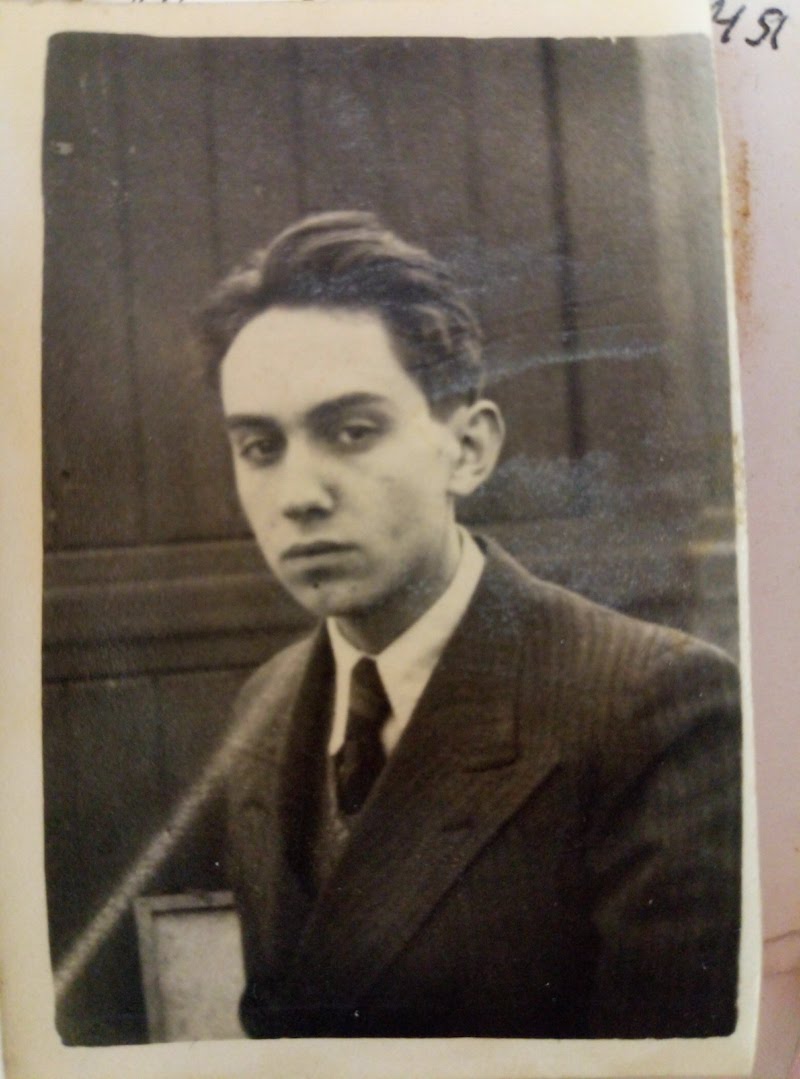
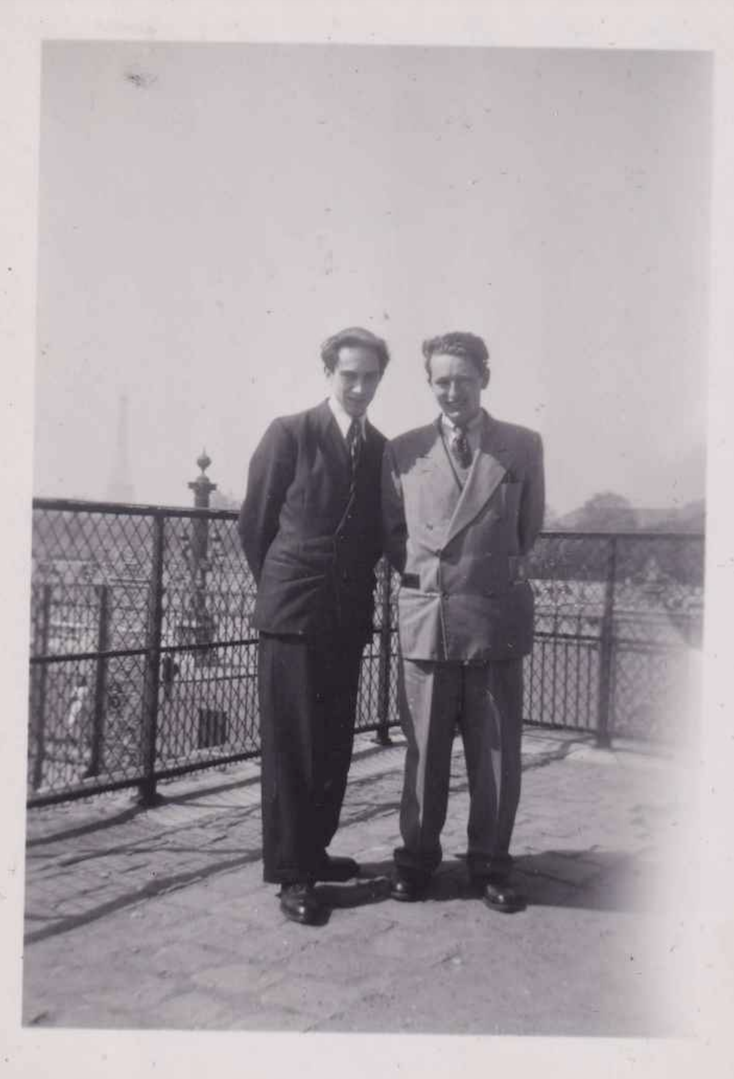
«Les êtres n'ont pas de pire ennemi que l'Être», Piotr Rawicz wrote in his novel Blood from the Sky. This translates roughly as “Beings have no worse enemy than Being itself.” People are inclined to consider themselves, their lives, and their experiences important, even unique – especially in dark and turbulent times – and to try to leave traces of themselves, like memoirs, in an effort to live on after death. Many, if not most, are this way, at least among writers.
But then some survive to find themselves at the center of big events, ideas, and scenes – yet make no bid for immortality. And while no account of a life, whether someone else’s or one’s own, can be entirely truthful, accounts of these people’s lives read as particularly uncertain, sometimes even morally dishonest. That said, the story of Piotr Rawicz, a figure practically unknown in Ukraine, needs to finally be told.
***
It all began in Lviv in 1918. When Helena Sabina Rawicz, neé Majerowicz, learned she was pregnant with her third child, battles were still raging in the city, and showed no sign of ending with Austro-Hungary’s capitulation. Up to that point, the Rawiczes had been a rather assimilated Jewish family. They didn’t follow religious traditions or go to the synagogue, and as their older son Marjan later recalled, the only thing stopping them from baptizing their children was a degree of religious skepticism, a certain “spiritual elegance.”
Yet big changes came, and no one was spared. In the course of just three months, from October to December 1918, the Rawiczes were forced to change their citizenship three times, from Austrian to Ukrainian to Polish. The withdrawal of Ukrainian troops from Lviv and the city’s full capture by the Poles brought further upheaval to the Rawiczes: Polish troops broke into their house wielding weapons, demanding their money and valuables and threatening to shoot them. Why? Ostensibly because Jews were believed to have collaborated with the Ukrainians and were now subject to a levy. While Solomon Rawicz, the father of the family and a respected lawyer, protested that he had always been a Polish patriot, the troops robbed them of everything they could find. A few hours later, the family heard news that the entire Jewish neighborhood was on fire, that a pogrom was in progress with looting and “hundreds, or thousands” killed, and that Polish soldiers were tearing the beards off Jewish men.
After that, there was no going back. These events dealt a blow that shook and eventually shattered their sense of belonging in all of its aspects.
Piotr, the Rawiczes’ third child, was born on July 12, 1919. His name sat at the intersection of Polish, Jewish, and Ukrainian traditions, uniting the three. Documents identified him as Piotr, in the Polish manner, and he was born on the day when Ukrainian Greek Catholics honor the apostles Petro and Pavlo (Peter and Paul). The Saturday preceding his circumcision featured a reading of Parashat Pinchas, Torah Portion, about the grandson of Aaron the high priest. This triality stayed with him all his life. Literary history knows only Piotr Rawicz. But he was Pinchas to his wife at times, and Petro – or, affectionately, Petrús’ – in letters written in Ukrainian and in his best friend’s journals. Some documents from Lviv’s first Soviet period also identify him as Petro.
In his youth, Rawicz lived a few houses down from Stanisław Lem, who was only two years younger than him. Yet the world of Lem’s high castle was vastly different from Piotr’s world, where Ukrainians took their place alongside Poles and Jews at the center of intellectual and political processes as well as daily life. Piotr Rawicz’s closest friend was the Ukrainian future historian Ivan Lysiak-Rudnytsky. The roots of this friendship were laid before their birth: Piotr’s father, Solomon, worked at the accountancy office of Ivan’s grandfather, who lived in Berezhany. And these roots encompassed a space much broader than the two friends – an entire family and community, and countless intellectual discussions.
Piotr learned Ukrainian by reading the poetry of Bohdan-Igor Antonych. He was in love with Sofia Yablonska (although really, who wasn’t?). When he left university due to the “bench ghetto” policies, he began studying Jewish religious texts and mysticism, and not with just anyone, but with a descendant of the tsaddiks of Belz. Upon entering university for the second time, he attended the lectures of Roman Ingarden. Legend has it that he even made a brief visit to Ahatanhel Krymskyi in Kyiv.
Piotr was tightly woven into Lviv’s common tapestry, with all its slang and jargon and languages, its people and houses and streets and trees, but most of all the entirely unique intellectual, political and creative atmosphere of that period. The period was neither easy, nor bright. The noose of violence was tightening relentlessly. But these were nevertheless Piotr Rawicz’s formative years: the seeds planted here grew throughout his life.
He survived the Holocaust and never managed to return to Lviv. Nor did the city that Rawicz was a part of exist after the war, at least in the metaphysical sense. And so his deep sense of belonging gave way to a painful, pining longing, wherein he was doomed to an eternal search for temporary shelter. As he himself later said, “my true homeland is the period of the German occupation.”
***
Piotr Rawicz later devoted considerable space and attention in his writing to individual symbols, including numbers and letters. I believe Jewish mysticism was the main source of this preoccupation. Yet there was no shortage of amazing coincidences in his life.
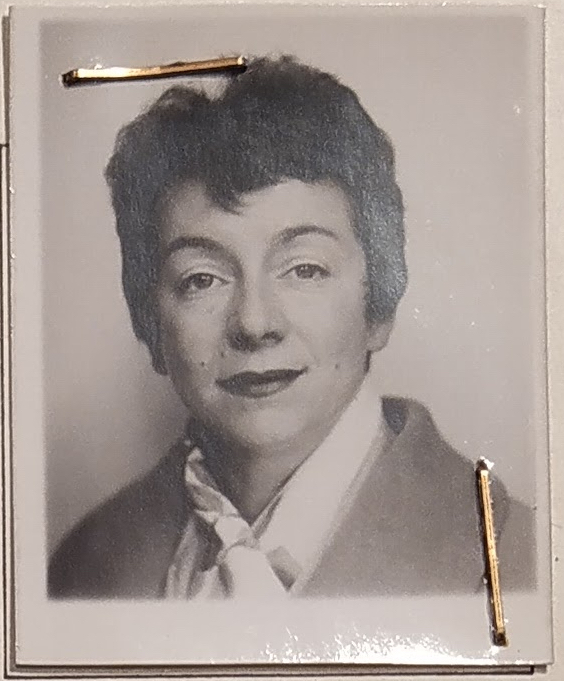
His partner, sometime wife, and friend for life, Rebecca, moved from Dzisna, in current-day Belarus, to study in Lviv. She came the year Piotr matriculated for the second time, and joined the same department – only she chose to study French philology, while he studied Orientalism. A single letter separated her last name from Piotr’s: she was a Jawicz.
During the war, she managed to take shelter and survive. Later, upon moving to Paris with Piotr, she became famous under the pseudonym Anne Dastrée. She devoted herself mostly to filmmaking, building a career as a director, founding a production company, and winning several international prizes. Between all this, she helped Piotr edit his texts. She appears to have helped a lot, as she often reproached him for her lack of recognition.
Anne Dastrée was an important figure in Parisian intellectual circles, including that of Jerzy Giedroyc and Kultura. The catalogue for the premiere of her short film Aurelia (1964) was illustrated by Józef Czapski. She stayed in contact with Czesław Miłosz, whose poem about her appeared in translation in The New Yorker in the mid-1980s. These are just a few small slivers of the biography of a remarkable woman.
***
No one knows exactly what happened – and how – to Piotr Rawicz in the years 1941-1945. It’s quite certain that he ended up in a Gestapo prison in 1942, and then in Tarnów, where he was sent to the Auschwitz-Birkenau concentration camp. All this was under the assumed identity of Yuri Bosak, a political prisoner. In September 1944 Piotr was moved to the Leitmeritz camp under his real name. He held out there until the liberation of the camps in May 1945.
People who knew Rawicz have speculated extensively about how he managed to survive. Yet nearly every version of the story is different – so much so that it’s hard to believe they’re all about the same person. This could be a result of Petro’s darkly humorous fondness for alternate personas. In one quite late interview, he admitted he had created five mythical biographies for himself and made use of them. Factual truth had no meaning for him.
One thing we do know is that Rawicz managed to survive by passing himself off as a non-Jew – and as a Ukrainian, most likely. This horrible paradox befell millions: people were forced to become Jews, even if they did not feel particularly “Jewish”. Yet this identity that had been imposed on them as their defining characteristic negated their right to life. Their only slim chance of salvation, then, was to pass as something else – as they could neither simply remain themselves, nor be what they had been labelled.
Rawicz was lucky enough to have an “Aryan” appearance, a broad knowledge and command of languages, the boldness to act unconventionally, and, finally, plain good fortune. Without these, his story would have ended by the mid-1940s.
After his release from the camp, Piotr reunited with his brother and Rebecca (now Anne) in Krakow. His mother died in Lviv. The Holocaust also killed all of his uncles and aunts and nearly all of his cousins. His older brother Marjan and sister Stefa left long before the war, and while Marjan was sentenced to death for his participation in the Spanish Civil War, he was eventually pardoned – and so all three siblings survived.
Piotr lived in Kraków for some time, continuing his education at the Jagiellonian University. In 1947, upon being awarded a scholarship, he and Rebecca-Anne went to study at the Sorbonne. And so they moved to Paris, where they remained for the rest of their lives.
***
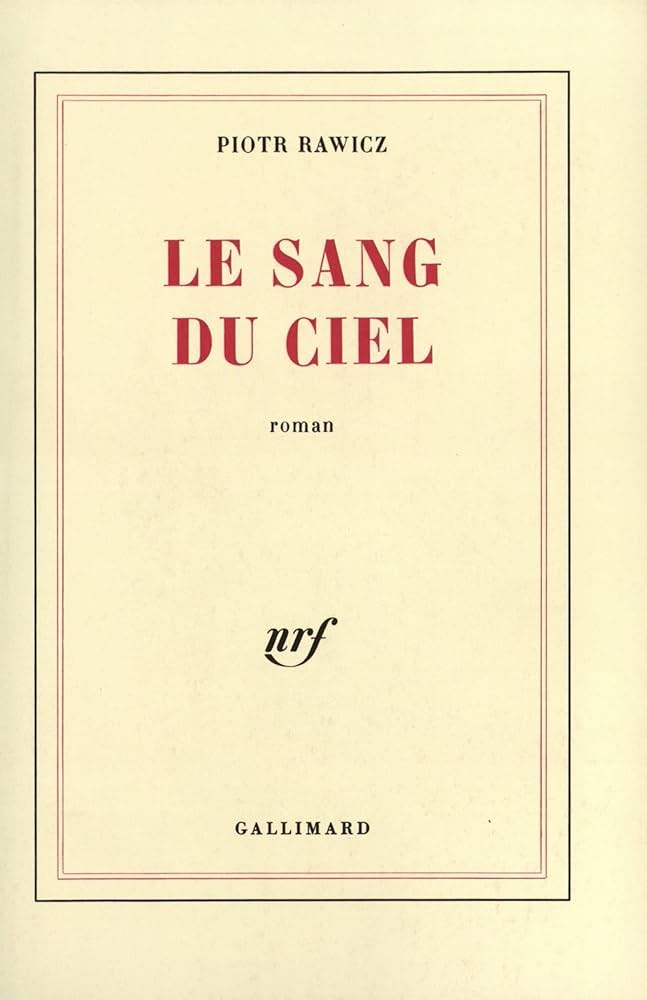
Fourteen years later, one of France’s most prestigious publishing houses, Gallimard, released Piotr Rawicz’s debut novel, Blood from the Sky. The work, part of the so-called first wave of French-language Holocaust novels, prompted lively discussion, received the Rivarol Prize, and was translated into numerous languages. Thanks to this publication, but not to it alone, Rawicz entered a circle of Parisian writers and intellectuals who were largely, like him, from the “margins” – emigrés from central and eastern Europe. In time, he began writing for Le Monde about literature from behind the iron curtain.
In numerous reviews, Blood from the Sky was compared to André Schwartz-Bart’s The Last of the Just, and to the works of Kafka and Camus. Critics noted its dark humor, complexity, and deliberate dissonance. It is genuinely hard to read. The work describes scenes of unimaginable atrocities, dives into despair and horror, and declares clearly that there is no hope. But its chief message is that the evils described are inherent to humanity – are normal, in a sense – and are not some exception to history.
This idea comes out in various texts by Rawicz, but takes shape most radically in Blood from the Sky, an expression of extreme despair and helplessness wrapped in a spider’s web of eclectic philosophy that gives language to what words alone cannot convey. The novel is quasi-autobiographical, and there is great temptation to read it as an account of the author’s personal experience during the Holocaust. This would be absurd, as far as events and facts are concerned, something Rawicz himself warns of. But in the deeper, metaphysical sense, it is of course an autobiographical work – one of horrifying mastery.
Rawicz’s language feels cut from flesh – living and dead. This is language whose existence contradicts itself, as in the statement “Beings have no worse enemy than Being itself.” The language rebels against ontological absurdity – by accepting this condition and existing nonetheless. Blood from the Sky will yet live to see its Ukrainian translation.
In both form and content, the author constructs the text like a musical fugue. It is very different from Paul Celan’s, but still a fugue of death. Rawicz integrates some of Ingarden’s ideas and theories, including the concept of multilayered work, the distinction between author and narrator, and the role of form and compositional integrity in sense-making. Antonych features, not entirely allusively, in Blood from the Sky’s culminating scene. The novel is suffused with references to Polish writers and poets, many of whom also have links to Lviv, such as Adolf Rudnicki. All this is tied together with threads of Jewish symbolism, texts, and legends. And folded into the text like organic, inherent components of devastation. Black milk.
Paradoxically, the rest of the world went on with its existence. It was only the end of the world for some.
***
After the war, Piotr Rawicz tried several times to hasten his demise. Quite miraculously, his loved ones managed to talk him down and save him, for a time. He spent much of this time writing about authors who were, to one degree or another, victims of totalitarianism, and many of whom were little known or entirely unknown to French audiences. Most of Rawicz’s articles concerned the crimes of the Soviet regime in some respect, and were published in the pages of Le Monde, among other places. These texts served as respectful tributes, analyses, and warnings all at once. The author used every chance to write about literature as an occasion to remind society about things it would rather not see.
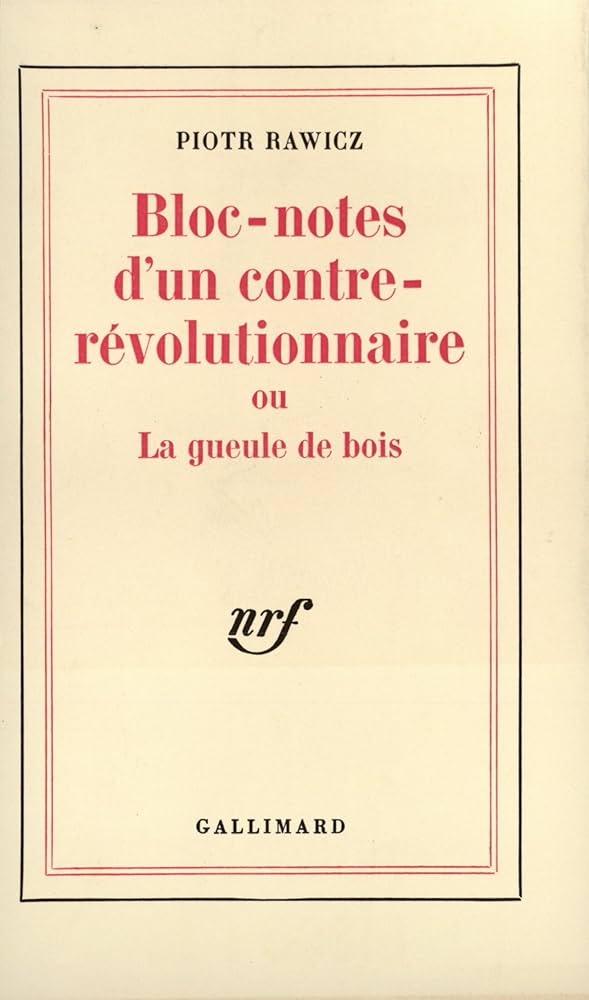
After the events of 1968 in Paris, Rawicz wrote another book, Bloc-notes d'un contre-révolutionnaire ou la Gueule de bois (Notes From a Counter Revolutionary, or The Hangover). This was a very different book – not an account of a tragedy, but a picture of the underbelly of a revolution from which the author believed everyone would wake up with “an astronomical hangover.” Unsurprisingly, the work’s reception was not just chilly, but hostile. A friend of Piotr’s told me how he once went to buy a copy, and the bookseller refused to sell it to him, saying it was “a very bad book.”
Rawicz used his influence to recommend books for translation to Gallimard that he considered to be particularly important – and little-known only for being written in “marginal” languages. In time he began writing the forewords to them, which were not so much introductions as fully-fledged philosophical and historical essays. His efforts led to the translation and publication of the works of Adolf Rudnicki and Daniel Kiš, and the Vasyl Barka novel The Yellow Prince, among others.
Rawicz’s foreword to The Yellow Prince is of particular note. In it the author was one of the first people, if not the first after Lemkin, to use the term “genocide” publicly to describe the famine of 1932-1933 in Ukraine. This was before the start of academic discussions on the issue, and well before “Holodomor” became a commonly-used term. What is more, he places it in the same category as the Holocaust and other genocides. This was risky, and Rawicz was likely one of very few people who felt entitled to make such comparisons — and who could not be rebuked for doing so.
The foreword is a very personal one. This is in part due to Rawicz’s deep love for Milena Rudnytska, who devoted great effort to bringing the story of the famine to the world. But Rawicz’s personal touch also comes through in the sentiments expressed in the final paragraph: “May The Yellow Prince be a cautionary tale, and may it pave the way for future translations, for other publications that acquaint the French public with the civilization and literature of a great country. Ukraine’s future will have a decisive effect on the future of all humanity.”
***
Piotr Rawicz ended his life in May 1982, a few weeks after Rebecca-Anne died of a severe and rapid illness. This time no one managed to talk him out of it.
He was always somehow everywhere and nowhere. Wherever he went, whether it was Lviv, France, or Poland, his name was connected with the most interesting circles of intellectuals. He was observed by Polish and French secret services simultaneously. He recommended books to one of the most prestigious publishers in Paris, and wrote for the best-known periodicals. Ivan Lysiak-Rudnytsky not only dedicated an essay on Ukrainian-Jewish relations to him, but named his firstborn child in his honor. Rawicz worked with Jerzy Grotowski and was friends with Elie Wiesel, Eugene Ionesco, Emil Cioran, Józef Czapski, Adolf Rudnicki, Danilo Kiš – and this list could go on and on.
At the same time, it’s as if he barely exists – apart from in specialized works on Holocaust literature. Rawicz truly did not care to leave a mark. His will even asked that his remaining personal items and notes be destroyed.
All he did and wrote is marked by the deep wounds of solitude. The solitude of a person who knows things about the world that others not only don’t want to hear, but cannot hear, for their ears can’t process the tones.
Rawicz’s language seems to exist not in spite of his humility, but because of it – not as a standalone entity invoked to voice an I, but as an instrument to convey the reality of evil, and, having met it face-to-face, to mirror it perpetually. To mirror it through words that ought to be said, but not heard. Whose author knows their depth, but doesn’t believe in their meaning.
Translated from Ukrainian by Katharine Quinn-Judge