Against many odds, my parents’ smile
This 1964 photograph taken in Riga shows a young man alive with humor and a woman deeply in love. It marks the beginning of a fifty-year marriage. It tells of a bond that resisted obstacles – quietly defiant in the face of bigotry. Today, as old prejudices resurface, the image gains new resonance. In this piece, the author celebrates her parents’ love.
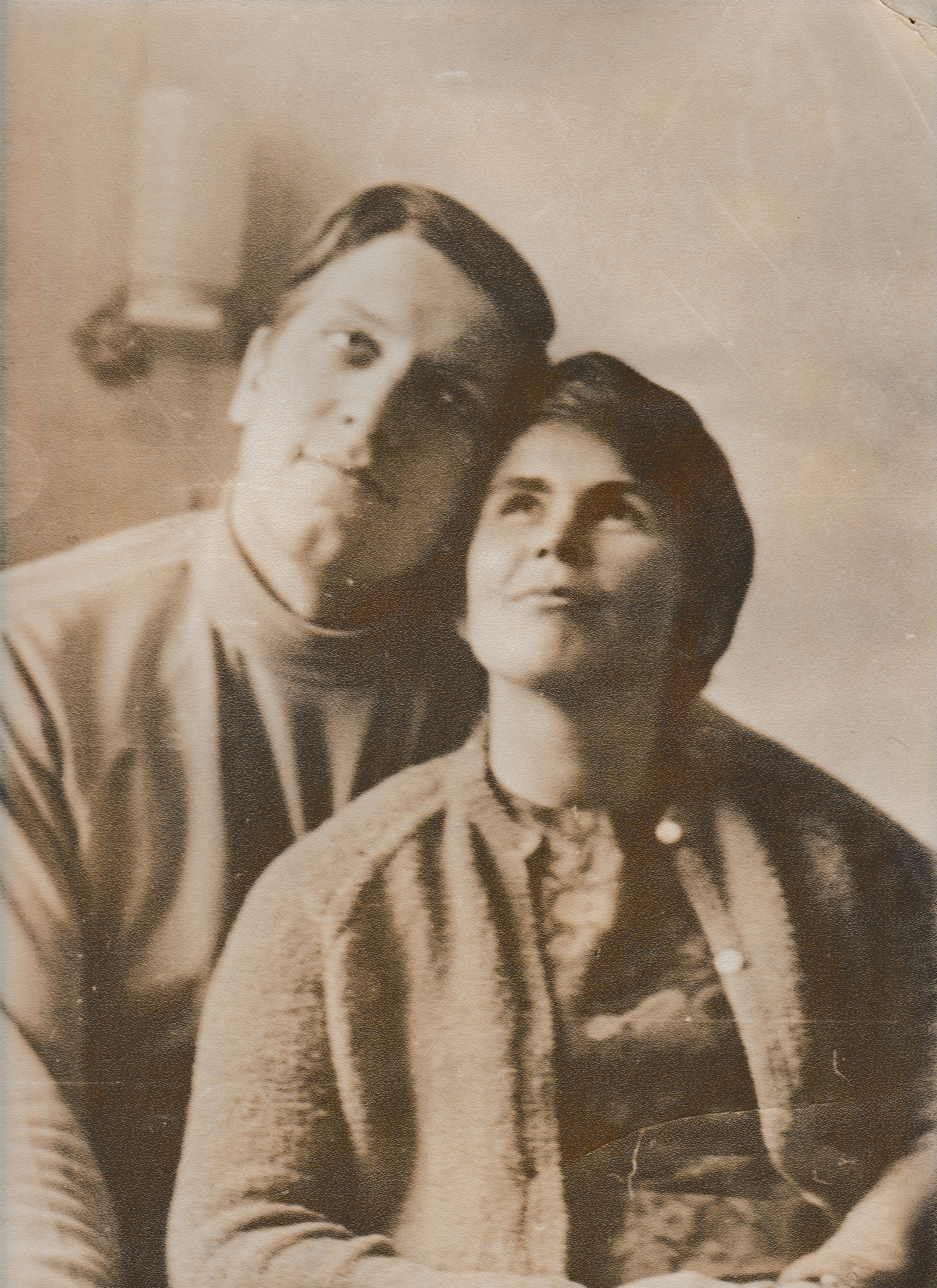
Mischievous, that’s the word. In this photo, my father’s mischief, his humour-loving nature, is clearly visible. And my mother, well, she just looks head-over-heels in love. They remained that way, together for fifty years — until my father’s death. This photo of my parents, taken in 1964, hangs on the wall by my desk. It greets me every morning. It is touching and reassuring. But recently, it has acquired an additional meaning. I catch myself glancing at it more often – possibly because of a particular darkness, which they had experienced in the early days of their love, and which is reemerging around us, increasingly impenetrable.
My mother, Alise, likes telling the story of how she first set her eyes on my father, Andris. In the old, mid-19th-century building of Riga’s University of Latvia, steep, wide steps lead to the Great Hall, where university graduations, celebrations, and occasional concerts, take place. During the Soviet occupation, the hall acquired new elements of interior design: the inevitable plaster-moulded head of Lenin, and hammers and sickles here and there. But the building itself stayed poised, unperturbed by the authorities’ urge to destroy self-confidence and symbols of pre-Soviet life. That day, in this majestic building, on those wide steps, stood a tall, blue-eyed young man in a white jacket. White! Unheard of, in those times of drabness and conformity.
Alise, with thick brown hair and dark eyes, is of Jewish descent and always stood out in the sea of Latvian blondness. Andris, tall, blond and blue-eyed, comes from a Latvian family from eastern Latvia, where the dominant church was, and still is, Catholic. Why would it matter, the eyes and the hair and the church? But it did – for my father’s mother, Mihalīne, very much so. And her strong feelings about the color of my mother’s eyes, and, later, mine, have left an enduring mark on the family history.
Back in the early 1960s, young and madly in love, especially after spending some time in close proximity, harvesting potatoes at the kolkhoz, Alise and Andris decided to meet both sets of parents and to get married. That is when it all began. “Congratulations!”, said my mother’s parents. “Over my dead body!”, said Mihalīne. I do not actually know what her exact words were, but something along the lines of “you are not marrying a Yid!” She was determined to prevent it from happening. A master manipulator, she threw fits and succumbed to sudden mysterious illnesses that supposedly only Andris’ break-up with Alise could cure, and when her son did not budge, she resorted to desperate measures. Mihalīne came up with a plan to bribe an army recruitment officer so that Andris, then a student, would be summoned to the armed forces and sent to a remote unit where he would have no access to “that Yid” for three years. Much to Mihalīne’s disappointment, the plan failed. Yes, my father was recruited and sent away, but no, it did not make him stop loving my mother.
Andris returned to Riga and civilian life even more determined to marry Alise, and they set out to arrange the wedding. He was still living with his parents — where else, as young people in the USSR, or people of any age, for that matter, did not have the privacy of their own dwelling, and were lucky if they had their own room. So, to get to his wedding, Andris had to walk from his building to the civil registry office, about eight blocks away. It was December, with freezing temperatures and snow. In a last desperate attempt to stop this union from becoming official, Mihalīne hid her son’s winter coat. Owning more than one coat was not an option then, so Andris found himself having to go to his own wedding coat-less. The story goes that he ran the whole way, so as not to freeze, and arrived at the registry office with his cheeks burning, but deliriously happy.
Alise became pregnant two years after the wedding, and by everybody’s account, was practically glowing. She was still a student, each day attending that majestic university building where she’d met my father. Mihalīne, having heard that “another Yid” was on the way, concocted a new plan. She would come to the university and linger in front of the main entrance for hours, waiting for my mother to come out. She would stand there silently, staring. Alise developed anxiety and, to prevent further health issues, looked for ways to stay away from Mihalīne, at times slipping out of the university through the canteen delivery door.
I was supposed to be born in January 1967, but hurried up and popped out in December 1966, weighing just over two kilos. My mother thinks Mihalīne’s vigil was to blame for my early arrival. I was a tiny little thing, with a wrinkly face and thick black hair that covered not just my head but also my back and forehead. Soviet nurses threw my mother disapproving glances – what kind of “monkey kid” is that? When I came home, my father took the first pictures – dark, wide-eyed, in a lopsided baby hat, which was too big for the tiny head. Now the families can be brought together, my father hoped. He would take photos of me to his parents, and their hearts would surely melt. The first grandchild!
It didn’t work; if anything, the effect was the opposite of melting. Mihalīne looked at the dark-eyed baby and proclaimed: “I will not be seen in the street with that Yid-baby!” She tore the pictures into small pieces, or so the family story goes.
The first time I met my paternal grandparents, I was four years old. It is one of my first vivid memories, the awkwardness, the surprise of discovering that I had a set of grandparents I’d never seen before. I remember the walk in the park, and posing for a picture. In the photo, my grandfather, conspicuously absent from all the previous stories, looks kind and happy. And he was indeed kind, if lacking agency. Mihalīne, on the other hand, stands with her lips tightly pursed, keeping her distance from the brown-eyed child.
Mihalīne is long gone, but the sentiments she displayed, the rejection of others because of their difference or perceived difference, much of that is still present today — and I believe it’s getting worse. Perhaps for a few decades, Mihalīne-style prejudice had been pushed to the fringes, never to come back, or at least not in full view. Yet it is here, around us, apparently uninhibited. I could end this piece on a downbeat note, suggesting that Mihalīne and her bigoted views have won. But then I look at my parents’ picture, Alise and Andris. They smile, they are happy, they are together — against many odds.