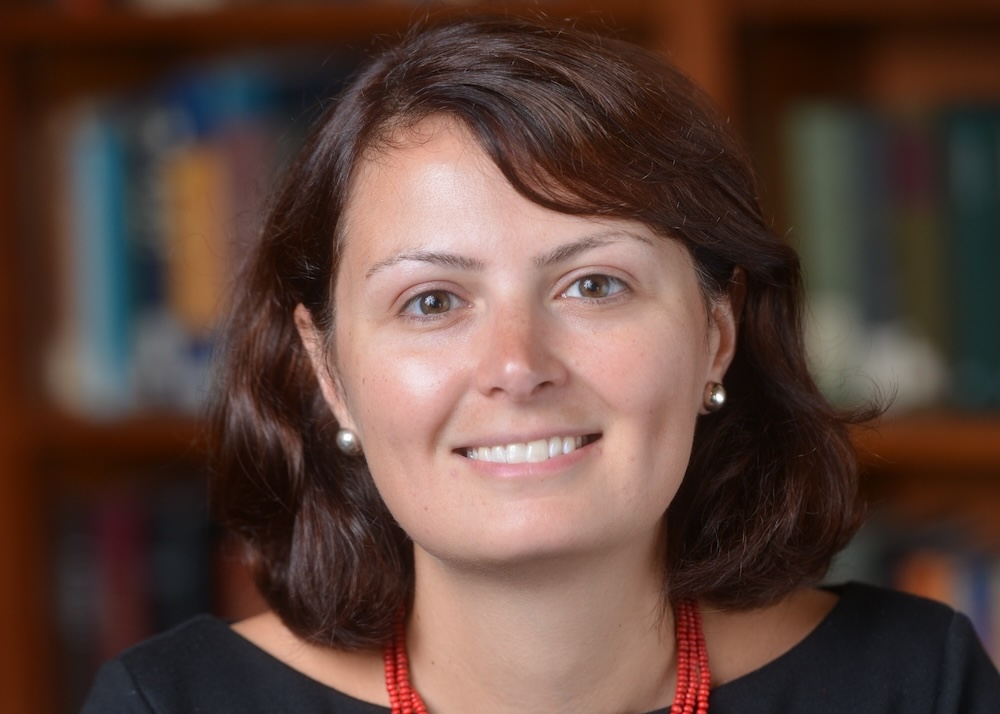
The distortive power of numbers: an interview with historian Aro Velmet
Do numbers always reflect reality? Our obsession with quantifying everything shapes how we understand human experiences and events. From urban planning to warfare to prediction markets, statistics play a powerful role in guiding decision-making. This interview explores how numbers, while often seen as objective, can also distort reality in ways that carry consequences.

One of the things you research is the unintended consequences of technological development. Can you give an example of that and explain how numbers play into it?
I'm interested in why states collect numbers about their citizens, their economies, things like that. In particular, I look at data collection in the Soviet Union and in post-Soviet states, which reveals a lot about how most states think about data in today’s world. To give an example, a part of my research looks at sociology laboratories in the Soviet Union, which conducted public opinion surveys of various sorts beginning in the 1960s. They looked into things like people's consumer habits. How many books do they read? Do they go to the theater? What kinds of sports do they play? What kind of apartment do they live in? What kind of apartment would they like to live in? How do they get on with their boss at their workplace? Are they satisfied with their job? These kinds of questions.
As the saying goes, the Soviet Union in the 1960s was the world's most advanced 19th-century economy. It was very good at producing heavy industry and military stuff, and very bad at producing consumer goods. When you compared it to the United States – where everybody had a washing machine, a microwave, and a TV – it looked pretty bad. So the Soviets wanted to supercharge their economy, and the way they wanted to do this was through a kind of social scientific study of how the Soviet economy worked. That's why they established sociology laboratories, institutes of cybernetics, all of these research centers, which were given the task of collecting data about how people lived and worked, aggregating it, and then finding places for efficiencies so that the Soviet Union could properly compete with the United States.
For instance, one of the things that the Soviets were doing at this time was building new housing districts. One laboratory in Tallinn studied over 40 Soviet cities to see how people liked them. Are they happy with them? What kinds of amenities do they want? Then they fed this information to the Soviet design and construction bureau so that it could use them as inputs for the next round of construction.
Then the 1980s rolled around. Gorbachev came to power and said that the Soviet Union needed a shot in the arm, needed economic reforms. And these sociologists, particularly in the Baltic republics, started saying things like, “Well, we've been doing these studies of people's habits for twenty years now, and the thing that we've found is that what they're most unhappy with is the tremendous centralization of urban planning, workplace management, all of these things that you wanted us to query.” They said, “Look, there are these standardized plans that come down from Moscow and make the housing projects look exactly the same everywhere we go. The people are saying that that’s what's making them unhappy. A Georgian person in Tbilisi wants very different things from an Estonian in Tallinn. What all of these people are telling us is that they want a decentralization of this kind of decision-making to the republics.”
So these sociologists and cyberneticians who were hired to shore up Soviet economic power were now critics of Moscow. If you look at the Popular Front movements in the Baltic region, which ended up leading the movement to break away from the Soviet Union, they were largely made up of those same sociologists and cyberneticians. They used this data that they'd collected over the course of two decades to make their case. And it was very hard to argue with them, because they had the numbers.
Does that kind of rigorous sociological approach still exist today in places like your home country of Estonia?
Yes, it basically got converted into the construction of digital public sectors. Estonia is the big poster child of this. They've been very successful at it, but it's all over the former Soviet space, including in Ukraine.
But there are some unintended consequences to be thinking about here, too. Because when you look at these countries and the kinds of conversations that they've had about data collection, and you compare it to the West, then one of the things you notice is that conversations in Germany and the UK, for instance, centred on the balance between the right to privacy and the efficiencies generated by mass data collection. In the former Soviet space, privacy enters the conversation mostly in the context of cybersecurity, and defending the state from outside attack. How do we prevent malicious actors like the Russian state or a rogue hacker from hacking into the system and running away with all of your data? That kind of stuff. In Germany, it’s more a question of what happens if the state itself decides to do something really nasty with all the data that it has at its fingertips. You can imagine why Germans would be a little bit anxious about that. There’s a fundamental tension here. States that use mass data collection can be more efficient, but they are also always more dangerous. And that’s a dimension that is often not appreciated enough.
Let’s talk about numbers and Ukraine. One thing I’ve been thinking about lately is the gamification of so many different things. At one end of the spectrum, you have things like office step challenges. At the other end, you have things like the Ukrainian military creating an online leaderboard for drone units and awarding points for, among other things, how many Russian soldiers a given unit has injured or killed. I’m curious to hear what you think about this.
I think the underlying issue is that the number and the thing that the number represents are not the same. They’re never the same. The number is a kind of simplified proxy for the thing it's supposed to represent. For example, a grade is supposed to represent the level of a student's knowledge, their mastery over a given subject, right? But we all know that that's not actually true. A country's GDP is supposed to be a proxy for a country's economic success, or its prosperity in some kind of general sense. But then again, we know that this isn’t true. Rebuilding areas that have been destroyed by bombs, technically speaking, raises GDP, because it's spending money on construction. But of course that doesn't mean that we want places to be bombed.
The issue is that the number is always an imperfect proxy for the thing that it stands for. And that's the issue with gamification: it can cause us to focus on the thing that makes the number go up, as opposed to the underlying phenomenon that we're trying to capture. In other words, once you have gamification, then people start trying to game the numbers. So one wants to be very careful when turning qualitative indicators into quantitative indicators. Because the deeper you go into human social phenomena, which are inevitably complex and multifaceted, the more fidelity you lose when you turn them into a number that either goes up or goes down.
Another thing related to numbers that has been in the news is prediction markets. On the trading platform Polymarket, you can place bets on hundreds of things related to Ukraine – things like, “Will Russia and Ukraine reach a ceasefire by X date?” and “Will Zelensky no longer be president at the end of the year?” Shayne Coplan, the CEO of Polymarket, has said that the platform's "wisdom of crowds" approach to information is more accurate than mainstream media. Do you buy that?
I think that is 100 percent hype designed to get people on Polymarket. I place absolutely no credence in it whatsoever. But I think it tells us a little bit about the kind of ideological moment that we're in, because this idea that the wisdom of the crowds is much more accurate than any kind of prediction from experience – or from a sociological study, or from a particular theory of how the world works, like international relations realism – is essentially the theory that underlies the ideology of neoliberalism. It’s this idea that the best kind of information processor out there is the market, because the market collects distributed signals from the world around us that have different levels of intensity through the price mechanism. Basically, the idea is that the market is a kind of natural computer that separates the signal from the noise in a way that no planned or coordinated system would be able to do, because the social world, people’s incentives and so on are just much too complex.
So what you’re saying is that prediction markets are a kind of extreme, logical extension of neoliberalism.
Yes, exactly. But there is a fatal flaw in this whole theory. If you read Friedrich Hayek and Milton Friedman and other theorists of neoliberal economics, then you realize that their fundamental assumption is that there are no huge information asymmetries in the market, that there aren’t situations where some parties to a transaction know just a whole lot more than others, in a way that is not going to be ironed out in the process of transaction. But that's not how most of the world works, and that's certainly not how warfare works. There are fundamental informational asymmetries.
So in the case of Polymarket, essentially what we're doing is we're conflating a market transaction with gambling. People are used to thinking of themselves as rational participants in a market, and why would Polymarket be any different from buying real estate or stocks? But, in truth, it’s really just gambling. When people put money on the question of, for instance, whether Zelensky is going to be president at the end of the year, their aggregate level of information is basically the equivalent of “is the ball going to land on black or red.”
A recent study estimates that the number of Russian and Ukrainian troops killed, wounded, or missing since the full-scale invasion started in February 2022 is on track to soon reach two million. What do you think when you hear that number?
That’s on both sides of the front?
Yes. To break it down, the study found that nearly 1.2 million Russian troops and 500,000 to 600,000 Ukrainian troops have been killed or wounded or are missing.
I think this number alone doesn't quite help us appreciate how huge of a human tragedy the war has been. The thing with numbers is always that you have to pick the right number and the right comparator. What is this number a fraction of?
I've just been teaching the history of World War I, and the period from 1900 to 1945 more broadly, which includes two of the worst conflicts in human history. The numbers of casualties were just staggering. And I don't think you quite appreciate the magnitude of those numbers unless you put them in context. It’s one thing to say that something like 16 million people died over the course of World War I, and many more in World War II, but what’s the context?
The thing that, for me, really puts it into context is to imagine being part of the generation that was born around 1900 in Europe. You’d just be coming of age at around the outbreak of World War I and still be of fighting age in 1939 when World War II broke out. If you were a man of that generation, your chance of making it to 1945 was about one in two. Less than that, if you were born in eastern Europe or the Soviet Union. In Ukraine, for the male generation, that number is probably closer to about one fifth. It's difficult to imagine how that doesn't fundamentally shape your outlook on the world, right? Because even if you yourself make it to 1945, you have basically lost half of your mates – or more. It’s something difficult to wrap your mind around.
So I think the two million number doesn't actually do justice to what this war has done to people's psychology and to the entire social fabric. It's only when you start thinking about how people have experienced it in terms of their own age cohort, the number of people whose life trajectories have been irrevocably altered by it, that you start to see the just indescribable social implications of this down the line.