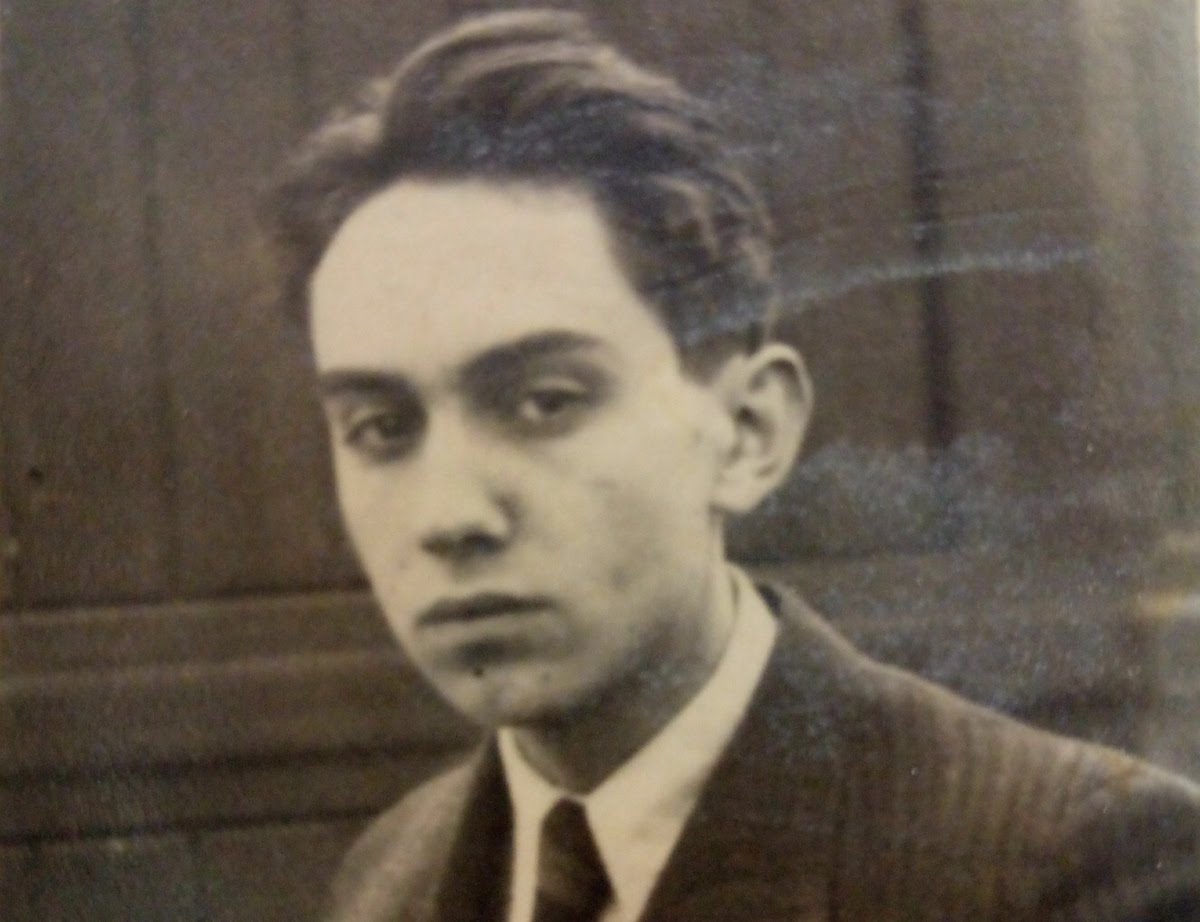
Todos Osmachka (1895-1962): a most tempestuous life
Todos Osmachka was a poet and writer from central Ukraine whose life bounced from genius to (apparent) madness. To survive Soviet persecution, he feigned insanity. He eventually fled into exile, and wandered across Europe and North America. In his poems and novellas, he was a master of metaphors and symbols. Here is the story of one of the most tempestuous and emotionally intense authors of the 20th century.
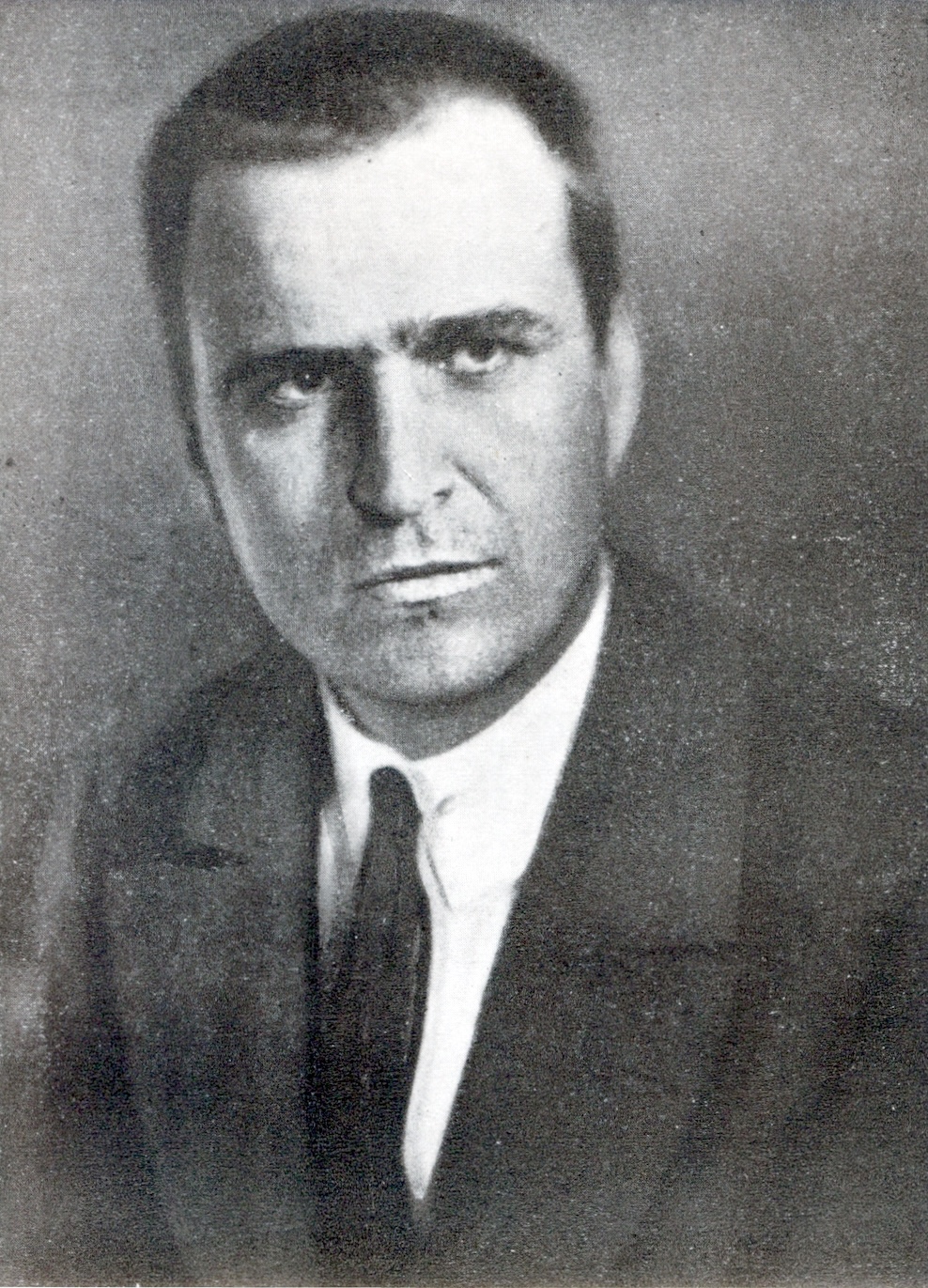
Todos Osmachka is an author whose life, from the very moment he was born, was shaping up far too disturbingly. A Symbolist poet, an eternal emigrant, the one who feigns madness, the one who is truly mad. A prose writer, a paranoiac, a bad friend, a good stylist. Todos’s whole life is a delirious dance between epochs and continents.
In 1895, a peasant woman, Yivha Osmachka, loses her hearing while giving birth to her son. Todos spends his entire childhood with a sense of involuntary guilt. He doggedly helps his mother around the house, as if to atone. Later, though, he will take it out on her, quipping to his friends that his mother cared for her poultry and her children in equal measure because “she had neither the time nor the free thought that comes with leisure to reflect on that phenomenon of ‘having children.’” Todos’s temper shows vividly in this duality: he can love and hate at once, long for intimacy and push away, admire his mother’s industriousness and be jealous of her because of it.
Stepan, the would-be writer’s father, works as a vet and is away at work all day. After work, he drinks. Todos will later dedicate his long 1947 poem “Poet” to his father’s memory, opening it with the line: “Woe betide you, o dreamer, beyond all measure!” As his few friends will later recount, Todos consciously cultivates the image of his father as an embodiment of all virtues; it fits his mythmaking well. Todos also has a knack for making things up and then believing them himself.
When someone later asks him, the already established author, about his siblings, he will dodge the question or recount some tangled stories. Todos is always fragmentary and unsystematic when recounting his past. Even Maria Keivan, a doctor and writer, one of Todos’s few friends and his most accurate biographer, could not say how many children there actually were in the family. “There must’ve been at least six,” she says. What we do know for certain is that at home they spoke, in Yivha’s own words, “the Christian language,” that is, Ukrainian. At school, though, the language of instruction was Russian, so Todos did not understand everything.
In 1916, by now a young man, he is up for conscription. According to Todos himself, he tries to avoid it by faking an illness: he collapses on the ground, biting through his tongue. An experienced doctor sees through his bluff but exempts him from service anyway. Perhaps it was on that occasion that Todos had his first epileptic episode, yet he never admitted it. Later, in the 1930s, Todos will feign insanity many times to avoid persecution and arrest.
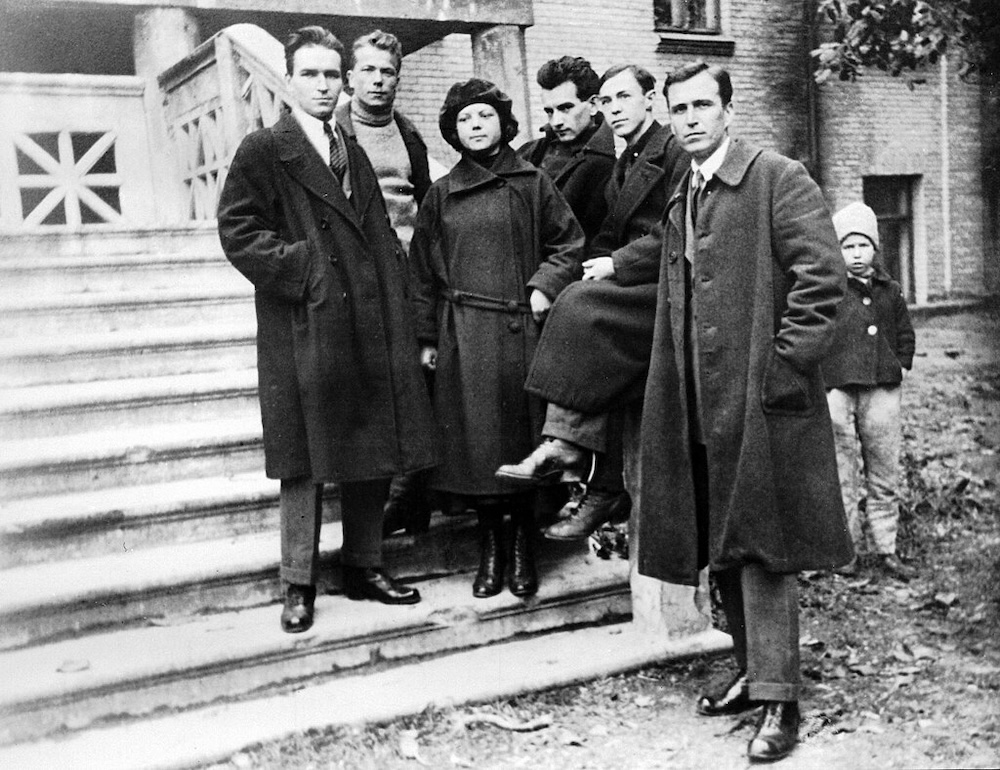
While still at the university, Todos joins the Writers’ Association and later the Workshop of the Revolutionary Word. The early 1920s is, perhaps, the happiest period of his life. A photograph survives from that time: next to Todos stand Borys Antonenko-Davydovych, Mariia Halych, Borys Teneta, Hryhorii Kosynka, and Valerian Pidmohylnyi. Literary youth who dream and think broadly, without much restraint. In his debut poetry collection Krucha [The Cliff, 1922], Todos portrays the world on an unprecedented scale: “O earth! / I hear your devilish guffaw / in the roar of millions of planets, / in the millions of ages.” The epic sweep of his thoughts, the folk imagery, the cosmic scale: such are the texts of a young but already fiercely ambitious author.
If I had to choose a defining trait of the young Todos, it would be irony. His contemporaries noted his near-sarcastic smile. That said, in his writings Todos never forgets the tragic touch. In 1923, his poem “Na Ihorevim Poli” [“On Ihor’s Field”] comes out, with its weeping, its lament over the fallen, and a premonition of the poet’s own fate. He keeps returning to the idea that an act of creation is probably the only way to attain immortality on an earth devoid of a single ray of moral light. In his poetry collection Klekit [Clacking], the lyrical hero, seized by despair, declares: “O, accursed be you, this life of mine!”
A maestro of metaphors and symbols, Todos knows no half-measures and never searches for a quiet word or a restrained image. His poems create an impression that even the young Todos, encircled by friends, is an infinitely lonely person: “I am lonely and cursed yet again— / leaning heavily against the window: / on the city walls, as if on crucifixions, / the dust storm is perishing.” Todos’s lyrical hero is constantly running away from melancholy, yet this never makes him even a little happier. “Where, where can I escape from grief, from those sinister voices?..” This question remains unanswered. Todos’s poetry is often pessimistic, dark. The present is cursed, the past lost.
Another major motive in Todos’s poetry is reclaiming the forgotten. In his poem “Skytski Vohni” [“Scythian Fires”], which gave its name to the 1925 collection and opened with the address “O, Scythians, my forefathers,” the author deliberately draws a continuous line from the distant “them” to the close “us.” Here, the Scythian-Ukrainian steppe transforms from a passive locus, a reservoir of resources, into a living place of memory and the core of identity.
In the late 1920s, the Soviet authorities begin to persecute Todos. It is at this time that he writes “Duma pro Zinka Samhorodskoho” [“An Elegy about Zinko Samhorodskyi”], a long poem about a leader of the Ukrainian national liberation struggle. Eventually, the manuscript has to be hidden in a bottle in his father’s vegetable garden for two decades. “Duma” won’t be published until the 1940s, by which time Todos is already living abroad. In 1930, the court hands down guilty verdicts in the trial of the Union for the Liberation of Ukraine, a fabricated case against the intelligentsia. Todos realizes that soon they will come for him, too. He lies low in his native village of Kutsivka, with his sisters, the very same ones he will later be so reluctant to mention in conversations. When they do take him away for interrogation, Todos again feigns madness (but does he really feign it?). His plan works as expected: Todos is sent to the Kyrylivka psychiatric hospital, where he stays until the Germans occupy Kyiv in 1941. Then, unlike hundreds of patients killed by the Nazis, he manages to get out.
Both in dark moments and in lighter periods, Todos is an incredibly difficult person, with a nearly unbearable temper. Apart from the short story writer Hryhorii Kosynka in his youth, few people are friends with him. Todos has no luck with women either. Or no, not quite: it is women who have no luck with Todos. He does not love his wife Lesia and mocks his son in every way he can. One day, having come home and sat down to look through his manuscripts, Todos lashes out at Lesia, accusing her of letting a “GPU agent” into their home who has read his poetry. On another occasion, the neighbors intervene to rescue Lesia from the enraged Todos. His friends send him to a sanatorium for neurotics, from which he soon escapes. Todos never forgave his wife her imaginary offences, and later, in emigration, he told everyone he was a widower, even though Lesia was alive. He never mentioned his son, in case the boy had become an NKVD agent.
Another love story happens to Todos when he is forty-seven. While resting at a health resort in Krynica-Zdrój in the Beskid mountains, Todos falls desperately in love with Abbess Yosyfa of the Studite Sisters monastery. He is so persistent in his advances that she is forced to leave the town. With Yosyfa in mind, Todos writes a number of poems that are featured in his collection Kytytsi chasu [The Trusses of Time].
All three novellas by Todos Osmachka are first published outside Ukraine. Starshyi Boyaryn [The Senior Boyar, 1946] is an incredible story about love, death, and the founding of a secret brotherhood, The First Kurin of Free Ukrainians. Here, Ukraine, in all its melancholy beauty, is not a real land but an imagined one, where time flows in cycles and space acquires the qualities of a mythological locus. The novella stands out among Todos’s other works for its atmosphere.
Only his autobiographical novella, Red Assassin (1956), will become better known, where the protagonist Ivan Brus, an idealist and a crusader against evil, attempts to oppose the destruction of the Ukrainian countryside. When an NKVD interrogator captures him, Brus decides to feign madness and does outplay this Chekist in a psychological game: in the end, Brus is sent to a psychiatric hospital. But can this be called human victory over the system? It goes without saying that Todos Osmachka, following the example of Flaubert, could confidently say: “Ivan Brus is me.”
World War II is not over yet when Todos leaves for Germany. In 1945, he meets the Keivan family there, at a displaced persons camp. This marks the beginning of one of the most fascinating periods of his life: first in Europe, then in America. By the late 1940s, Todos is already living in the United States. At first, he works as a night janitor at Penn Station in New York, then as a bookbinder, translator, and building concierge. Todos keeps changing jobs until 1957, when the journalist and editor Yurii Stefanyk sets up an aid fund for him.
And yet, even after getting help from the diaspora, Todos never stays anywhere for long. “A lonely traveler who walked toward eternity,” Keivan writes about him. Time and again, fear drives Todos onward. The same story repeats itself every time: Todos arrives in a new city and throws himself into the emigrant circle, hoping for recognition and acceptance, only to decide shortly after that the people around him are either NKVD spies or his personal haters. Todos calls local groups and organizations “unnecessary and worthless,” and the literary process “barren and weak.”
Finally, Todos ends up in Canada. Having fallen out with every wave of emigration there too, he returns to the United States. Montreal, Edmonton, Minneapolis, Toronto: Todos continues his travels, but most often he visits New York and Philadelphia. Wherever he goes, he always takes all his manuscripts with him. In these years of emigration, Todos often takes on the role of a ruthless critic, tearing his colleagues’ texts to shreds. In his article “The Wilderness of Our Artistic Tastes in Literature and in Literary Milieu,” he accuses fellow writers of singing “a heartless, wooden funeral song,” meaning that the Canadian-American press lulls readers to sleep rather than comforts them.
Todos himself cannot bear criticism and treats his own works with extreme jealousy: in his manuscripts, even commas must not be corrected. He regards the authors of past epochs as his ideals, above all George Byron. He appreciates William Shakespeare and John Milton too. He translates all three. He views his contemporaries in emigration highly negatively. In the artists who left the USSR he most often sees “paid NKVD agents seeking to deprive (him) of his life.” What Todos fears most, however, is being poisoned: he never eats from the communal table, trusting only the Keivans.
In emigration, starting back in Germany, Todos frequently visits outpatient clinics, usually with imaginary illnesses. Physically healthy and hardy, he constantly wheedles prescriptions for one new medicine after another, yet almost never picks them up. Mentally, though, Todos truly suffers, most of all from paranoia and from visual and auditory hallucinations. “One may wonder how someone with a mental illness could make such a colossal contribution to culture and, on top of that, become an example of a heroically uncompromising life,” Maria Keivan writes lovingly about her friend.
Todos spends the final years of his life waiting for the Nobel Prize, never doubting that he will soon receive the world’s foremost literary award. What matters more to him, however, is not international recognition but the money, which he is constantly short of.
Todos makes his last great journey in 1961, a surge of longing for Europe. In Germany he is struck down by paralysis. He is flown back to the United States on a special military transport flight. He spends the last year of his life at Pilgrim state hospital, on Long Island.
Todos Osmachka passed away on September 7, 1962. He found his final resting place in the Ukrainian cemetery in the small town of Bound Brook, New Jersey. His grave is unpretentious: you would hardly believe that beneath the brown slab with its modest pattern lies one of the most tempestuous, most emotionally intense authors of the 20th-century.
What you do want to believe is that in the end he found peace and reconciliation with himself and the world.
Translated from Ukrainian by Hanna Leliv