“Live consciously”: an interview with Zuzana Čaputová, former president of Slovakia
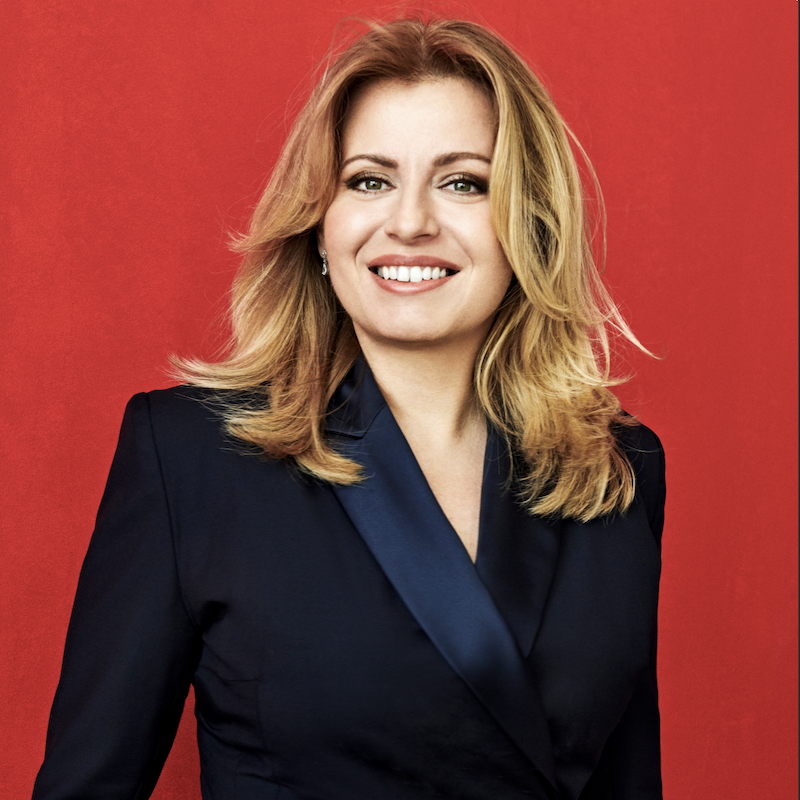
Zuzana Čaputová is the first woman to have held the position of president of Slovakia (from 2019 to 2024). A lawyer by training, she first became well known through environmental campaigns. She is a strong voice for democracy and fundamental principles, and she stands with Ukraine. During her years in the presidency, she was, however, subjected to hate campaigns and online abuse. In this conversation, she reflects on civic resistance, fighting polarization, and the inner work required to defend freedom today.
There is a long history of expressing dissent and fighting for freedom in your country. The 1989 revolution, as well as civil society mobilization in recent years, have shown that people are ready to protest, to express disagreement in the face of autocratic power. Although you were very young in 1989, to what extent did the dissident movement influence you?
Slovakia does have a strong civil society, even though the steps taken by the government in recent years have often aimed at weakening it. Paradoxically, this strength is also the result of the setbacks in our democratic development since 1989. Almost every moment when democracy was under pressure led to greater civic mobilization and, in the end, to a stronger civil society.
As for the Velvet Revolution, I was sixteen at the time and had no direct contact with the dissident movement. Its ideas began to shape me later on — especially the understanding that political power ultimately comes from its true source: the citizen.
As president of Slovakia, you focused on liberal, democratic, and pro-European values, including advocating for the ratification of the Istanbul Convention. At various stages of your presidential term, you were subjected to harsh verbal attacks and criticism. What helped you to endure?
Yes, at the time the opposition turned me into one of the main targets of online hatred. This was accompanied by a wave of disinformation that continues to flood the Slovak public space to this day. I was labeled an American agent or a “Soros puppet” – the familiar language of populists and extremists.
The verbal attacks were accompanied by death threats, directed not only at me but also at my loved ones, including my children. In that moment, the boundaries of what should be considered a normal political contest were clearly crossed.
What helped me in those moments was returning to the essence of why I had decided to run in the first place. My motivation was simple and firm: a commitment to democratic values. And I must add that the way back to that essence always led through silence, distance, and the ability to look at oneself with perspective.
Which authors, books, and people have helped you deal with harsh disagreement or criticism when it appears, and more generally, have played an important role in shaping your views?
When I was sixteen, I was deeply influenced by a book written about 2,600 years ago — Laozi’s Tao Te Ching. I have returned to it many times since. In a way, my time in office was also an experiment: whether its message can truly be lived while serving as a head of state.
The book speaks about the personal path of living in alignment with one’s values, but it also reflects on power. It suggests that those who hold authority should also strive to live according to the highest principles — so that power is exercised for the benefit of others, without losing oneself in it.
Through this book, and through my own experience, I have come to understand how essential inner work is for anyone who holds public power: self-reflection, self-knowledge, self-acceptance — and the ability to keep one’s ego under control. Because without inner work, power can very easily become a path to losing oneself.
What do you think lies behind the polarization and fragmentation of societies today, particularly in Slovakia?
That is a very complex question, and I will try to answer it briefly. I believe that behind it lie several factors that have contributed to the crisis of democracy over the past two decades.
These include global trends such as growing inequality in wealth and income, changes in the labour market driven partly by new technologies, globalization, migration, social change, and the polarizing effects of social media. On top of that, we have faced a series of crises in recent years – from the financial crisis to the COVID pandemic and the security challenges we are confronting today.
All of these developments create feelings of uncertainty, fear and loss of meaning for many people. And people who feel afraid are much easier to manipulate. Populists, extremists and disinformation actors – often supported from abroad – use this very effectively.
For many of them it is enough to label a part of society as an enemy – someone people should fear and hate. And this is where the real danger emerges: the radicalization of society within an increasingly polarized environment.
Slovakia faces this problem in a particularly serious way. According to several studies, we are among the most polarized societies in the European Union.
Disagreement is an essential component of democracy, but if it is not contained or is mismanaged, it can lead to violence. When can disagreements be resolved, and when not? What, in your view, is necessary to overcome disagreement?
Personally, I distinguish between differences in values and differences in opinions. When there is a clash of values, it can be very difficult – sometimes even impossible – to find common ground, and dialogue may simply become a waste of time. For example, if I consider equality among people to be a fundamental value and my counterpart does not, the space for meaningful dialogue is very limited.
In most cases, however, the differences between people are more about opinions than about values – and that is not a hopeless situation. In those moments, I try not to equate a person with their opinion. It is entirely possible that if I had lived their life, their experiences might have led me to similar conclusions.
That is why I try to see people in a broader context and to build dialogue on every point of agreement we are able to find. Even that does not guarantee that we will ultimately agree on a specific issue.
But we may experience a moment of understanding on something else – and sometimes a single moment of understanding is enough to begin rebuilding trust.
In your 2019 inaugural speech, you said: “We need to build bridges across the chasms that have opened up in society in recent years (…) We can express our attitude to difference, to other traditions, to different experiences and to other points of view without infringing on the freedom and dignity of others.” But how can one fully respect the “dignity” of the other when the “other” is a person or an entity that commits violent aggression, verbal or material?
This is a clear example of a conflict of values, not merely a difference of opinion. When someone commits violence against another person, it represents for me a denial of the fundamental humanist values on which our civilization is built. Responding to such actions with respect or an attempt to accommodate them would be naïve – even irresponsible.
In the face of destruction, we must defend our inner world, our relationships, and our countries. Destruction does not deserve our tolerance. Democratic values deserve our protection – and our courage to defend them.
Dissidents used the phrase “Live in truth” as a way of resisting the communist system. But what formula could help confront today’s problem, which arguably lies in the degradation of public discourse to the point where disagreeing with someone is equated to being their enemy?
Living in truth should always remain our aspiration. At the same time, I agree that today we face additional and complex challenges, and honesty with ourselves and with the world is only the starting point for addressing them.
Today, a person with a different opinion is often perceived as an enemy. In Slovakia this contributes to the fact that we are among the most polarized societies in the European Union and also among the countries with the lowest levels of interpersonal trust. I believe that fear plays an important role in the background of this phenomenon.
Populist politicians cynically exploit this fear in order to control people more easily. They point to groups of citizens with different views and portray them as the cause of crises. They identify a culprit, present themselves as saviors, and offer quick – though unrealistic – solutions.
This dynamic then becomes fuel for hatred between people themselves. When we add the influence of disinformation and the algorithms of social media, the result is cognitive fatigue, disorientation, and a growing difficulty for people to navigate reality and make informed decisions.
It is a complex problem that requires complex solutions. But if I were to name one guiding principle, it would be a simple one: live consciously.
Be aware of who we are – and of the values that allow us to endure as a human community.
You have spoken out forcefully about Russian disinformation in Slovakia and the need to combat it. What, in your view, has enabled Russian propaganda to find such fertile ground in Slovakia?
This phenomenon has been examined by a number of experts. In Slovakia, the susceptibility of part of the population to believe pro-Russian disinformation is among the highest in the European Union.
One factor is historical memory and the symbolic role of Russia. In parts of society there is still a persistent narrative of the Soviet Union as a liberator in 1945, combined with a sense of cultural and linguistic closeness among Slavic nations and a romanticized image of an “eastern protector.” This persists despite the invasion of Czechoslovakia by Warsaw Pact troops in 1968.
Another factor is weak trust in institutions. Slovakia ranks among the countries with relatively low levels of trust in the state and political elites. When trust in domestic institutions is fragile, part of the population becomes more receptive to alternative geopolitical narratives. At the same time, the Slovak online space hosts a very active ecosystem of disinformation websites. Their typical narratives portray the West as morally decadent, NATO as aggressive, and Russia as a defender of traditional values.
Other factors include socio-economic frustration and weaker media literacy. In the end, however, pro-Russian attitudes in parts of society say less about Russia itself and more about a lack of trust in the domestic system.
In any country, ignorance or entrenched irrational beliefs can and often do become sources of disagreement: people can fall prey to conspiracy theories and other forms of manipulation. In such cases, attempts to convince them with facts often fail. One reason may be that they equate their views with their identity, so that challenging those views feels like a denial of their identity, of their very existence. What are your thoughts on how to address this?
I believe this is a challenge that affects many countries around the world, and many of them are already trying to address it. At the same time, it has become increasingly clear that persuasion through arguments and facts alone does not always produce the desired results. Sometimes even direct evidence does not work, because the cognitive dissonance it would create can be too difficult for people to accept.
Nevertheless, it is important not to lose these people – not to humiliate or dismiss them. Many of them have simply found themselves in an environment where, metaphorically speaking, they are drinking from poisoned wells without even realizing it. That is why it is important to maintain respect and the willingness to understand them.
At the same time, we should recognize that our real opponent is not the people who have come to believe disinformation. Our common adversary is the system of disinformation itself, whose aim is to exhaust us, paralyze society, and weaken democracy.
Finally, it is essential to restore the balance between freedom of expression and responsibility for what we say. This is one of the fundamental legal principles that we have begun to neglect in recent years.
As president of Slovakia, you called for assistance and solidarity with Ukraine, encouraged empathy toward refugees (who are predominantly women) and advocated for the transfer of weapons to the Ukrainian army. Today, Ukraine’s resistance against full-on aggression comes at a very high price, and this too is a struggle for freedom. Yet not everyone in the West or in Europe, not least Slovakia’s current government, sees it that way. How could this specific disagreement be overcome?
It is very difficult, also for the reasons I mentioned earlier, including the influence of disinformation. Despite the abundance of clear facts, some people remain almost completely immune to them.
The responsibility of the rest of us – including myself – is therefore to speak about what is evident and what I have had the opportunity to witness during my repeated visits to Ukraine. Russia is the aggressor, and Ukraine is defending itself, doing so at the extraordinarily high cost of many lives lost and many people wounded.
This is a violation of international law and of the most fundamental principles of humanity. Ukraine, therefore, deserves the full support and assistance of other countries. And I am proud that this solidarity is still visible in the support and fundraising efforts of people in Slovakia.