My shelter, my storm: when Arundhati Roy writes about her mother
In her first memoir, the renowned Indian novelist and political thinker Arundhati Roy writes about her mother, Mary Roy, a remarkable woman who was both a source of strength and pain in her life. Mother Mary Comes to Me is a moving reflection on family, memory, and inheritance, and sheds light on what shaped Roy’s worldview and writing.
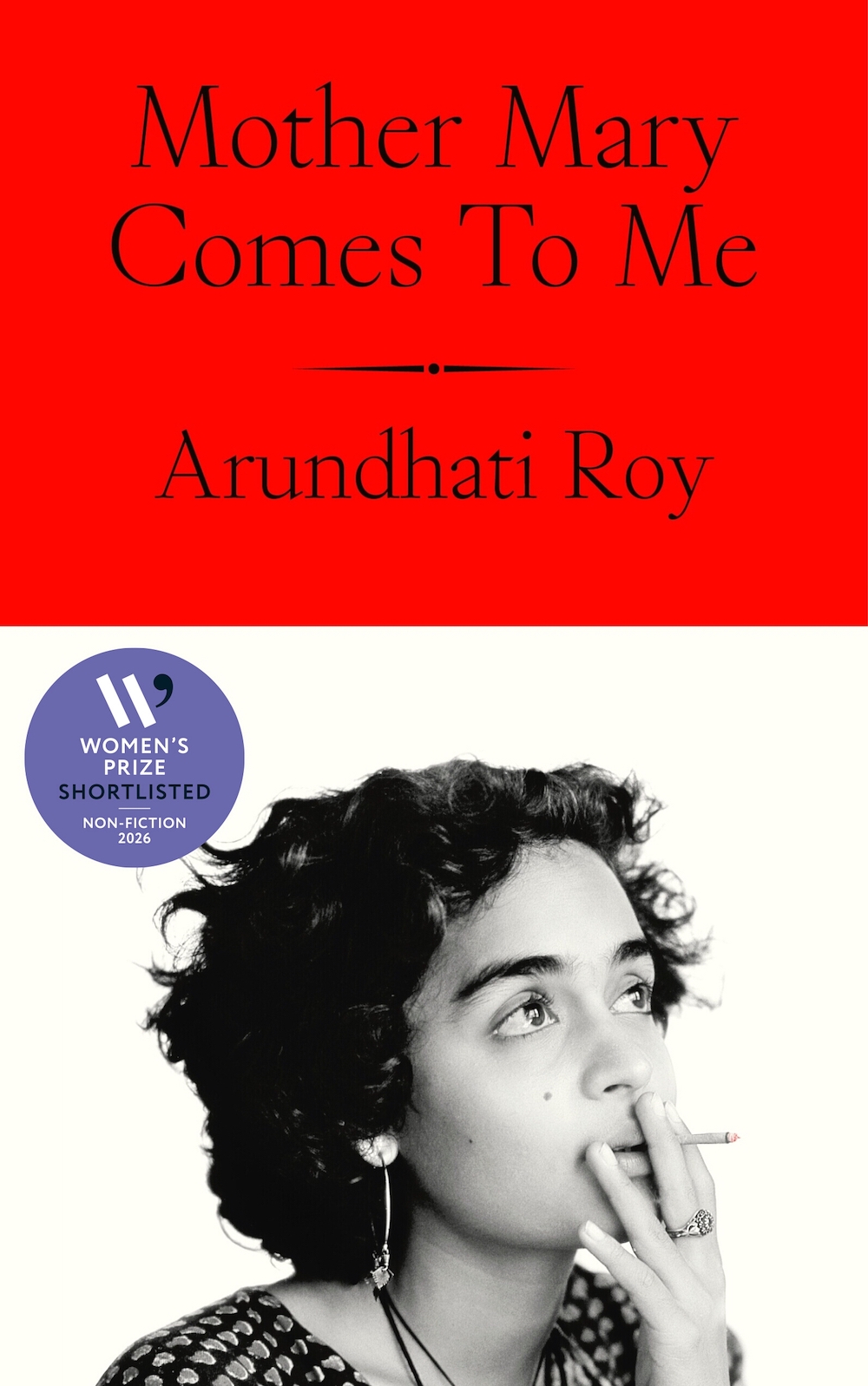
In her latest book, which came out last year, Arundhati Roy writes about her mother, Mary Roy, a charismatic, authoritative, talented, and painfully destructive figure in her daughter’s life. Mother Mary Comes to Me is the first memoir by Roy, who is best known for her 1997 novel The God of Small Things, which won the Booker Prize and brought her wide acclaim. Early in Mother Mary, she writes that her mother was her “shelter and [her] storm”: it is these two images, in particular, that were used in the title of the Swedish translation. They define what this book is about.
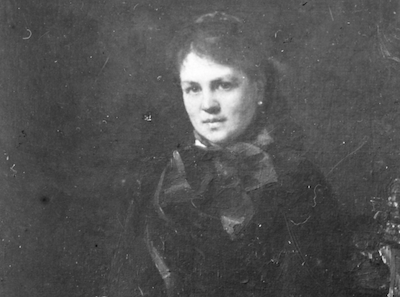
This formulation – shelter and storm – sets the book’s tone. Roy is writing neither a traditional biography of her mother, nor an autobiography about her own development as a writer. She’s writing about the unbelievable strength of one woman, thanks to whom Arundhati was “Mary Roy’s daughter” in the eyes of others; yet the figure of Mary more often reminded her daughter of the impossibility of having her own relationship with her mother. Mary Roy was a dedicated educator who founded a school in the Indian state of Kerala and also won a landmark court case about Syrian Christian women’s inheritance rights in India. This case meant Mary had to sever ties with all her relatives, whose inherited property she successfully sued them for, but the activist was and remained steadfast (and lonesome) in her righteousness and fight for justice.
Arundhati inherited quite a lot of her mother’s nature: the fight for justice and equality became the guiding principle in her own life, too. But, as far as I can tell, there is a crucial difference in these two women’s attitude toward the world: whereas Mary saw the world as a field of battle, for Arundhati it was a playing field, even if the stakes were too high. Mary Roy’s life was filled with bitterness and pain; she had no one to lean on aside from her herself (this picture of loneliness and self-reliance is accentuated by the visual image of a stout woman who suffers from asthma and spends much time in bed, from where she presides over her educational kingdom).
Arundhati views the world completely differently. No less offended by injustice or finely tuned to recognize and fight all sorts of inequality, she, however, always has people around who love her and whom she loves. Arundhati grows up not completely alone, but in the company of her brother; later, as a teenager when she can no longer bear the constant pressure from her mother and she leaves home forever, she is constantly surrounded by friends. It would seem that this ability to make friends, to maintain warm relationships with people over decades, is Arundhati Roy’s particular strength, one that turns the world into a space for play, a space where you can have fun. When Arundhati later befriends and then marries director Pradip Krishen who comes from an influential family with means and all the accompanying privileges, it gives her not only a sense of security, but the material foundation to create and fool around. Whereas Roy speaks of her mother as a “gangster” everyone was afraid of, she speaks of herself as a rebel who finds meaning in struggle and creativity first and foremost not for herself, but for her community: she wants to share with them the resources that success and fame bring.
In the book, Mary Roy comes off as more than a strong woman who changed the course of Indian history by offering children who had nothing the opportunity to study and Christian girls the chance to inherit their fathers’ property. She is also a cruel mother who ruined her own children’s lives. Her maternal presence was disastrous for both her children, but especially for her son, Lalit Kumar. It’s as though she took all her anger with humanity’s patriarchal structures out on him. Mary kept her son so frightened that Lalit was unable to focus on school, and his academic failures only increased his mother’s psychological terror and physical violence against him. Whenever Mary Roy praised her daughter’s high grades (the only praise Arundhati received), she simultaneously belittled her son. This asymmetry affected Arundhati’s life going forward, as she inevitably felt guilty any time she was celebrated, since it was precisely then that somebody else was likely suffering humiliation. It is possible this experience formed Arundhati’s attitude toward her success as a writer: it was a resource to be shared with others, thereby easing the burden of guilt she felt for her success.
Mary Roy was a despotic mother. It was like she was unconsciously exacting revenge for all the world’s sins against her own children: she did everything to prove they had no right to expect better treatment from her than she gave her students. She had to prove that they were capable of nothing but disgracing her. While reading about her endless forms of humiliation, I thought about the power of forgiveness and about the impossibility of forgiving. Whereas Arundhati is at least capable of seeing Mary’s strengths, her brother will never be able to forgive their mother. Whereas Arundhati surprised herself by grieving for her mother after her passing, Lalit Kumar could not comprehend attending the funeral of someone who had only ever abused you.
The dichotomy between Mary Roy’s various roles, public and private, makes this work an interesting piece of feminist literature. One could say this is a book about feminism that doesn’t idealize its feminist protagonist. Arundhati Roy does not deny the social significance of the figure of her mother, does not downplay her courage or historical role. Yet nor does she subscribe to the simplistic view that the social struggle automatically justifies private violence or emotional cruelty. In this sense, the book broaches the question not only of what it means to be a strong woman in a patriarchal society, but also of what price those close to you might be forced to pay for your strength. For Arundhati Roy, nothing excuses private cruelty.
Her childhood experiences are reflected in the adult Arundhati’s political views. When she was six years old, a Naxalite-Maoist insurgency broke out in India which grew into a multiyear armed conflict between the government and leftist rebel groups. Mary Roy took the latter’s side. In Kerala where the family lived, Marxists were in power and Arundhati grew up amid constant talk of a revolution that would put an end to the injustice and inequality, which influenced her own political worldview.
In Mother Mary, Roy shares that when she was young, her brothers and sisters from the leftist movement were poorly informed about Communist terror, the Soviet gulag, the Holodomor in Ukraine, or persecutions in China. I was reminded of a conversation she had with Ukrainian writer Oksana Lutsyshyna. Arundhati Roy candidly admitted that, although she was surprised by the rejection of the Soviet legacy in eastern Europe, she was trying to understand it – as an example of how countries try to distance themselves from parts of their pasts. If you like, you can read Mother Mary as a text about the development of Arundhati’s political views, tracing a direct lineage of leftist sympathies from her mother.
For me, one of this book’s greatest strengths is the complex way Roy describes her relationship with her mother. Arundhati Roy does not synthesize various experiences in an attempt to reach a common denominator. She does not try to clean up her mother’s contradictions, does not turn her into a convenient figure of memory. On the contrary, the book exists thanks to these contradictions. The author’s mother forever remains “Mrs. Roy,” never “mom,” and only an authoritative (and authoritarian) figure that stormed through the lives of her own children. The creation of the image of “shelter” alongside this one is an additional layer thought up by Arundhati. In fact, the daughter becomes shelter for her mother – or at least her memory – not the other way around.
It’s interesting that Roy writes from a place of witness and not accusation. Her goal here is not to pass final judgment on her mother, but to understand how the person who inflicted so much pain on her could, at the same time, be such a source of intellectual energy and courage for others. For Arundhati, her mother became a symbol of defiance and provided one of the most interesting topics she’s pursued in her writing. Roy acknowledges that she lost her greatest source of creativity when her mother died.
Here her memoir touches on a broader question: how is the writer formed? Is writing a form of revenge, a path toward acceptance, or both of these at once? Arundhati shares how her various texts are made, both fiction and fact, and is herself surprised that fiction sometimes hews closer to the truth. This is how she describes a scene from The God of Small Things that turned out to be not something she made up, but a memory: “I really believed it was fiction. I learned that day that most of us are a living, breathing soup of memory and imagination – and that we might not be the best arbiters of which is which.”
In this way, this book offers a key to understanding the work of Arundhati Roy, whose literary works and essays inextricably join the personal and the political, the corporal and the collective, the familial and the national. Mother Mary Comes to Me explicates how such an optics could be formed. While in The God of Small Things the caste system, violence, childhood memories, and political history intertwine in a complex narrative tapestry of family history, in her memoirs Roy seems to be returning to the origins of this textile. Politics gets its start not only “outside” in the state system, parties, courts, or ideologies. Politics also begins at home, in the mother’s voice, family relationships, inheritance law, at school, and in the body of a child, abandoned by its parents in the middle of the night, all alone in an open field. A child, who, through fear and trembling, learns to resist.
Translated from Ukrainian by Ali Kinsella