The funny truth: how cinema messes with reality and makes us laugh
Cinema has always explored the edges of truth and how it can be approached, both in drama and in comedy. Experiments run from Orson Welles to This Is Spinal Tap and modern TV satires. This essay explores a very special and witty corner of cinema, where mockumentaries, fake biopics and parodies of classic documentary reign.
There’s an old adage that truth is stranger than fiction, but what’s underappreciated is that truth is often quite a bit funnier than what’s simply made up. The human capacity for drama and heartbreak goes without saying, but even in the most awful of times there are aspects of behavior where a spark of risibility is what sets us apart from the monstrous.
Since its earliest days cinema has explored stories of factuality, of humor, and of general drama, but it’s in the hybridization of these elements that makes for some of the most effective and beloved titles. The key is to take the “truthiness” of a situation, the acuity of documentary form, and to apply it to circumstances that at once are eminently believable, but fundamentally the fodder for foolishness.
The messing with the mechanisms of truth-telling to be fictive goes back at least to the likes of Orson Welles’ The War of the Worlds radio broadcast, with the inherent comedic result being those who missed the opening moments had assumed the entire report was blisteringly real. In the 1930s it was funny to think of those fools who didn’t think to check other channels for verification, while looking back from the present day with AI-generated news feeds, social media manipulation and the even more staunch siloing of our information delivery the quaint, unequivocal acceptance of official broadcasting feels even more of a bygone age.
Over the decades this encroaching cynicism to what counts as truthfulness has been welcome fodder. It pokes at epistemological and hermeneutical doubts via the mode of what’s often subtle farces that are near indistinguishable from what they are pastiching. Woody Allen’s Take the Money and Run (1969) and Zelig (1983) are sublime exemplars, yet one need only look to the “News on the March” section of Wells’ own Citizen Kane from decades prior to see how these projects connect directly to this hybridized collision between fact and fiction, comedy and drama, in ways often more impactful than adhering to more narrow genre tropes.
With early experiments running the gamut from Richard Lester’s A Hard Days Night (1964) twisting the reality of Beatlemania, through to jet-black social commentaries like Peter Watkins’ Punishment Park (1971), certain filmmakers were able to prod audiences to reflect upon their own preconceptions about given topics. More overtly zany productions such as Monty Python’s Flying Circus, or the offshoot Rutland Weekend Television that birthed the comedic take All You Need Is Cash that introduced Ruttlemania, shaped generations of comedic writers and performers to be unafraid to tackle documentary truths in their most absurd iterations.
American and Canadian sketch comedy shows such as Saturday Night Live and Kids in the Hall would incorporate documentary elements, mimicking everything from news reports to self-serious activist pieces with a sense of playfulness, while cinematic successes like Wayne’s World were birthed from pitch-perfect recreations of amateur community television headbanging hosts.
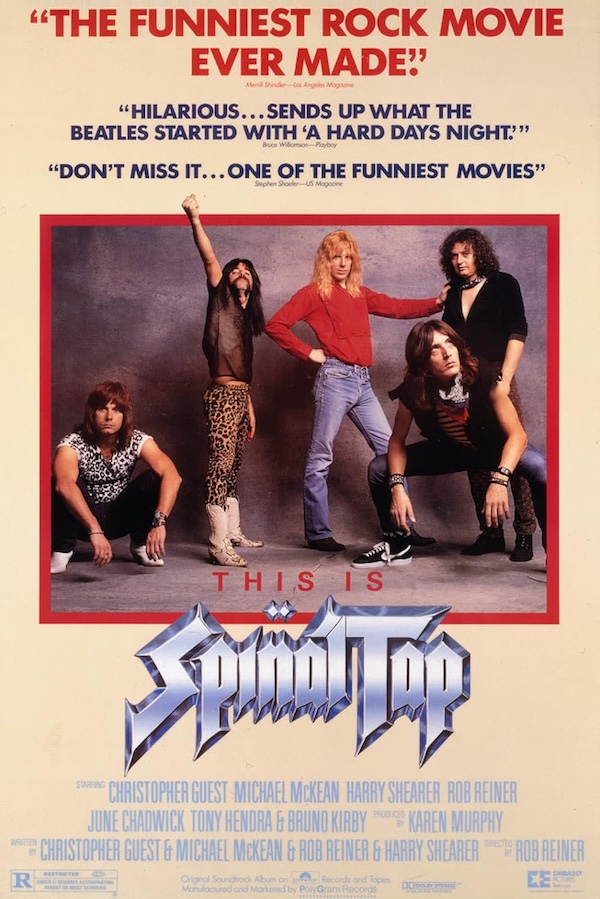
1984’s This Is Spinal Tap is a fundamental touchstone for the matching of documentary style mined for comedic effect, and for many it's the apotheosis of what became known to be the “mockumentary” form. The nomenclature, an ungainly neologism merging documentary with mockery, has always been a poor fit for the best of these works, as they have less to do with simply making fun of the original work or milieu and more to do with mining the deeper truths of the absurdity of everyday life. The innumerable bands that felt Tap told their own story is well documented, and the film’s lasting legacy is how even decades later its overt silliness speaks to deeper and more profound truths about the excesses of rock music than more straightforward projects ever could.
Out of the Tap experience came the great works helmed by an American-British comedian Christopher Guest, masterworks that dove deeply into other subcultures such as small-time theatrics with Waiting for Guffman, canine cavorting with Best In Show, and Folk music nostalgia with A Mighty Wind. The latter film is a sibling as such to Spinal Tap, yet in some way its comedy cuts even deeper. Classic songs from the former, like Big Bottoms or Stonehenge, are magnificent parodies of the excesses of rock. But tracks like the Oscar-nominated A Kiss at the End of the Rainbow or AMW’s title track are so perfectly composed that one could easily make the case that if recorded back in the late 1960s and recorded by the likes of the New Christie Minstrels or Ian & Sylvia, these would be considered stone-cold classics that rivaled any other songs from that era.
The same can be said for films such as Walk Hard, the biopic spoof channeling everyone from Dylan to Cash to Presley with such comedic bite as to make ridiculous the very mechanism of the modern biopic. Or Popstar: Never Stop Never Stopping, another exceptionally well-crafted comedy with musical production that rivaled the biggest hits on the charts.
It’s that electric sense where the comedic almost supplants the dull, quotidian truth of historical accuracy that gives many of these projects their lasting power. While there’s not much to laugh at in the serial killer fake-doc Man Bites Dog from 1992, there are still moments that are so bizarre yet truthful that they inevitably come across as darkly comedic, especially a tour-de-force section when a rival documentary crew is encountered with both laughable and horrific result, culminating in a further elevation of the meta-nature of the film.

Albert Brooks’ contributions to the form are equally legendary, with his 1979 film Real Life unabashedly spoofing early reality television programs such as 1973 An American Family to increasingly absurdist results. Brooks’ droll delivery and overt, postmodernist critiques are overt touchstones to contemporary works, referenced in everything from Little Miss Sunshine and I, Tonya to the philosophical works of Baudrillard, that even more overtly reference the surrealism of everyday living to provide cerebral comedies with deeply philosophical undertones.
In 2026 alone we’ve seen John Wilson’s A History of Concrete continue his sardonic look at given topics and how they morph through deeper examination, through to his collaborator Nathan Fielder’s blockbuster doc about Elizabeth Holmes, You Can See Everything. It is a blisteringly effective film that breaks down the very mechanisms of truth-telling to its absurdist core, pushing audiences to question their own culpability in being fascinated by the subject in the first place. Like Brooks’ films from a generation before, these works use our proclivity to prioritize the mechanisms of documentary to provide a journalistic purity, making the derived comedy that much more acerbic, and in turn that much more effective.
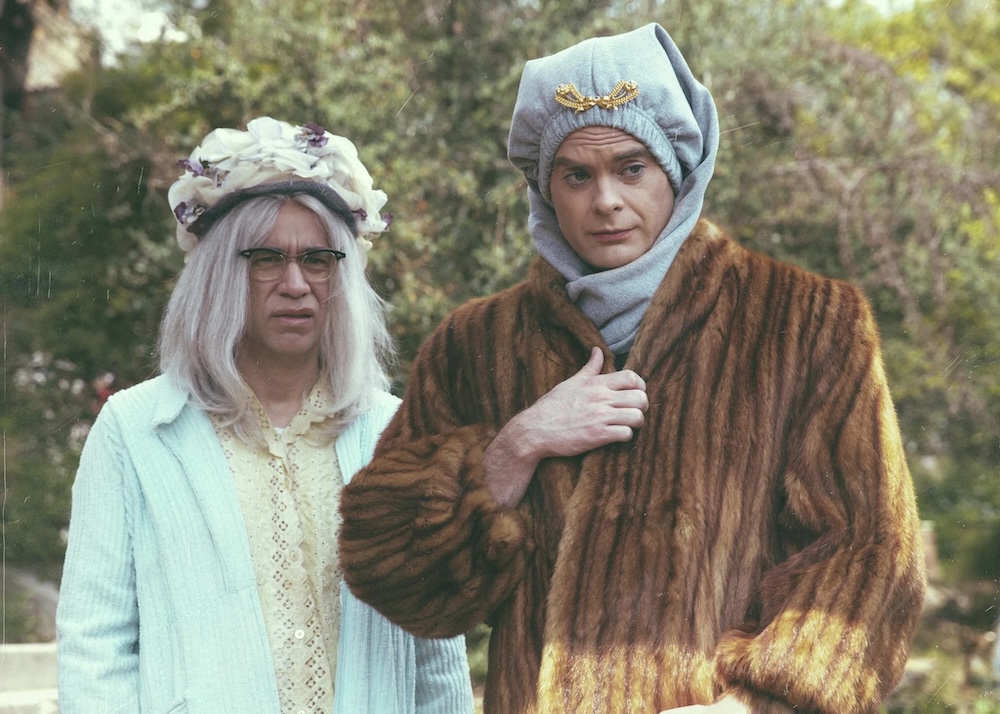
While the likes of popular workplace sitcoms such as The Office or Parks & Recreation took the shaky-cam vérité shtick of direct cinema into episodic success, there are even more meta parodies that dive that much more deeply into what makes documentaries work. Documentary Now!, is an unabashed love letter to numerous classic docs. The episode “Original Cast Album: Co-Op” is so spot-on it mirrors the effectiveness of A Mighty Wind, while other episodes lovingly spoof classic docs such as Grey Gardens, Nanook of the North, and The War Room.
On the other side are those that take overtly comedic characters placed into real situations to provoke specific reactions, with none more successful than Sacha Baron Cohen. Through his various guises and characters including Borat, Brüno, and Ali-G, his own hybridized comedy results in a unique blend of improvised mayhem and deeply unsettling moments of cringe. Or there’s the troupe from Jackass that for decades have hurtled themselves into situations of great physical harm resulting in something that blends the voyeurism of a circus freak show with the vicarious thrill of watching the limits of the human experience, all with a sickening sense of our own participation as passive viewers to the mayhem. Both Borat and the Jackass crew saw their form of mayhem return to screens in 2026.
There are some films that unabashedly lie as they follow the form of documentary for deeper comedic purposes. Take Weird: The Al Yankovich story, a film as precise as Walk Hard when it comes to ravaging the elements of the biopic, and as connected to the relevant source elements as Documentary Now!’s project. It does so in a way perfectly befitting an artist whose whole career has been taking elements from pop culture and twisting them just enough to be silly while maintaining the familiarity of the original source.
Finally, there are those that take many of the lessons of these documentary-like situations and incorporate them elegantly into a general dramatic structure. Wes Anderson’s recent Asteroid City, with its matryoshka-like narrative structure, toys with the divide between the real and the performative in wonderful ways. Jesse Eisenberg’s latest, The Debut, mines the same verisimilitude as A Mighty Wind and Guffman in what feels to be a traditionally structured drama about a middle-aged woman auditioning to play a small role in a small-town community theater musical production. So much of what works about his film, beyond the exceptional performances, is the absolute precision of creating the world of this community theatre troupe, with the songs that Eisenberg crafted for the musical-within-the-film Nosy Neighbors evoke all the documentary-like realism of Christopher Guest’s films while maintaining the mechanisms of more mainstream dramatic filmmaking.
The truth is that truthfulness can be quite hilarious, and in a myriad of ways artists and writers have been able to take the very modes of storytelling and rejig slightly to amplify the comedic elements to often great effect. Humor can, of course, thrive off the fanciful, but there’s something particularly powerful about amplifying the nonsensical nature of the quotidian, finding even deeper ways of understanding humanity by taking time to laugh at its most absurd and ridiculous attributes. And as this year has demonstrated more than many, we all could use a big laugh, even if at the end it leaves us with tears in our eyes from the exertion.