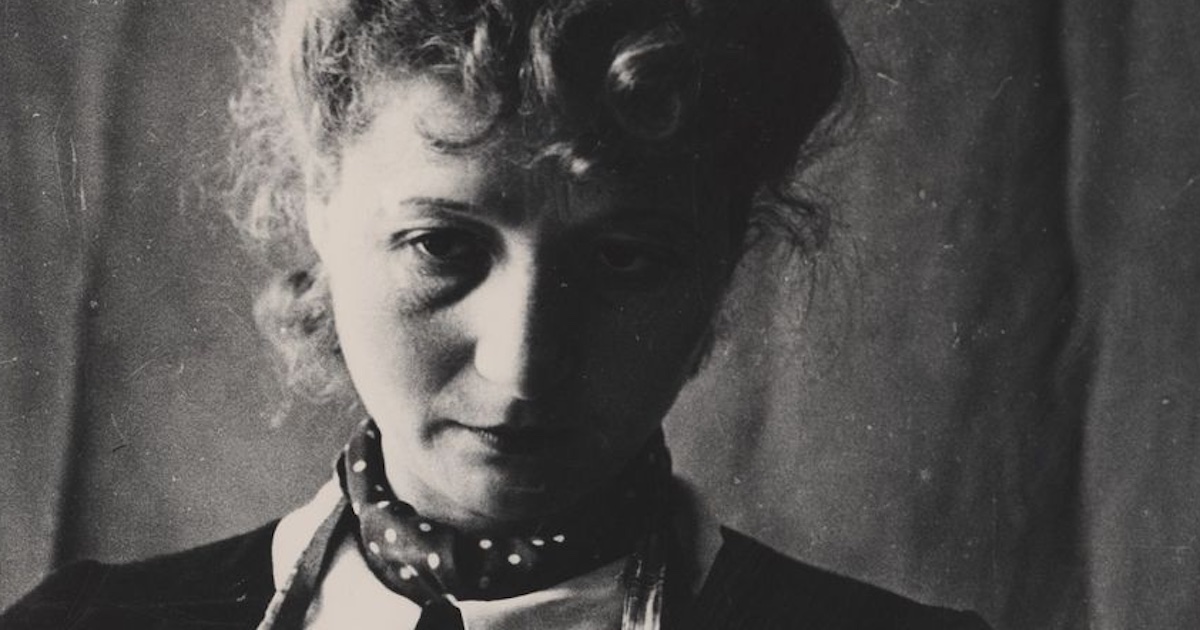
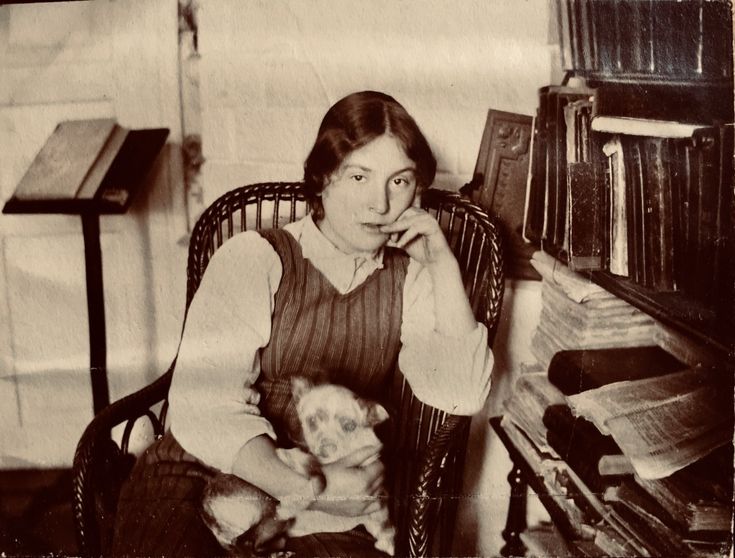
Queer film director Barbara Hammer: outrageous, perverted, and splendid
Barbara Hammer (1939-2019) was an American feminist documentary film director and writer. She was one of the pioneers of the lesbian cinema. She grew up in California, and had Ukrainian family roots. Her career spanned over fifty years. Her work challenged social norms and transformed the way queer lives were shown on screen. She explored desire, aging, identity, history, and death. She also gave new powers to film viewers.
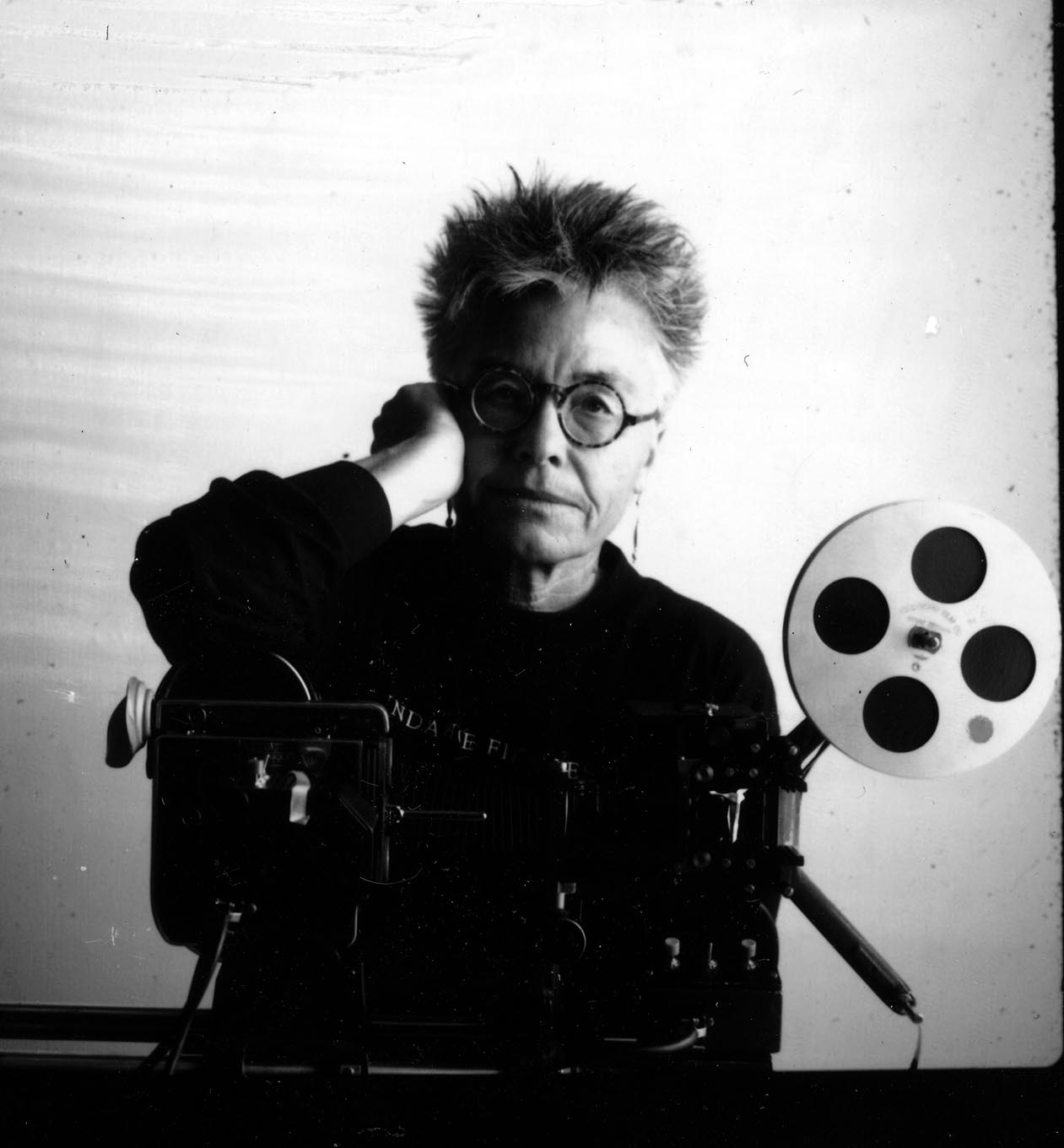
“Outrageous. Perverted. Splendid”: this is how Barbara Hammer described her own art and, in fact, her very life in her memoirs. Perversion, appropriated as a way of existing “aside from the norm,” grants the freedom to act and create beyond normativity, mainstream, and hierarchy.
Before Hammer, cinema had known no voice that spoke about the experience of being a lesbian so openly, let alone in an experimental form. Hammer’s Dyketactics (1974), the first film to document erotic life from the perspective of homosexual women, was, in her own words, a “lesbian commercial.” Until then, on-screen queer experiences had largely been represented from the viewpoint of heterosexual people and turned into a set of clichés, often with a “cautionary” tragic finale (apparently so that no one would even think of coming out). Rebelling against this deliberate invisibility, Hammer focused her creative endeavors entirely on experimenting with film form and content.
Between poetics and documentation
Speaking of the first discovery that influenced her quests as a film director, Hammer mentioned concepts from avant-garde filmmaker Maya Deren: film poetics and the non-linearity of time, or vertical temporality, in which the present, the past, and the future co-existed simultaneously. Montage as a form of poetry was a defining feature of Hammer’s practice, even though she sought to loosen the norms of avant-garde structural film, with its primacy of form over content, and to restore emotional intensity to the image. Intimate portraits, closeness, nostalgia, sadness, pain – but also curiosity and the joy of learning – came through in the superimpositions, optical manipulations, and chemical and physical alterations of the film stock in her movies.
Hammer defined the genre of her works as essay documentaries or “metadocumentaries,” since they made room for blending various experiences with self-reflection. In nonfiction films, Hammer saw an opportunity to “negotiate cultural values and meaning in Western culture,” to “prompt social change and engender significant cultural debate.”
Hammer’s early movies broached themes that were quite taboo at the time: menstruation, female orgasm, corporeality, aging – and yet lightness and humor were present in them, too. Their screenings were often jeopardized by attempts at disruption and censorship. Once, before a screening, Hammer was threatened with the confiscation of the film, so instead she staged a performance: clutching the box containing the film, she recounted Multiple Orgasm (1976) in full detail while standing in front of a blank screen.
You’d think the subjects she addressed would have found backing among feminist activists, but instead they often ended up at the center of heated discussions. At the time, a pronounced rift emerged between feminists who protested against pornography and sex-positive feminists who believed that consensual erotic life must not be censored. Hammer, in her turn, argued that on-screen displays of violence against humans and other living creatures were more pornographic than the scenes of sex in her films. Moreover, in most of her movies it was she herself in front of the camera, vulnerable in her attempt to erase the line between the private and the public.
Invisible queer history
Pursuing the subject of censorship and silencing, Hammer contemplated queer history – or the lack of it. For queer activists, archiving and preserving history was critically important, as too many physical artefacts had already been destroyed not just by power structures (back when homosexuality was criminalized) but, sometimes, by homophobic family members. Because of this, most archivists who found rare tangible or intangible evidence of history of previous queer generations came to be likened to treasure hunters.
This space of fragmentation and absence prompted Hammer to make her film Nitrate Kisses (1992), which explores both the censorship of queer films within mainstream discourse and the self-censorship within the queer community itself. “We are a community, and we have our own censorship,” she argued. “You never see old lesbians making love.” Among the objects of censorship she named young radical women with tattoos and shaved heads, women of color, cross-ethnicity relationships, and sadomasochistic sex practices. For that film, Hammer chose couples who could pass neither the external censorship of the normative world nor the internal censorship within their own communities. The scenes featuring these couples alternated with footage from Lot in Sodom, a 1933 film directed by James Sibley Watson and Melville Webber, layering the present onto the past.
The exploration of queer history continued in Tender Fictions (1996) and History Lessons (2000) – the two films that, together with Nitrate Kisses, form a kind of trilogy. Tender Fictions is Hammer’s attempt to capture her own history as a person who does not fit societal norms, set alongside the history of feminist and lesbian activism in the 20th century, in which many outsiders found support. Another important subject of the film is the truth and fiction in autobiographical creative work, and the very possibility of “truth” in a work of art. Challenging the conventional objectivity of autobiography, Hammer deconstructs her offscreen voice: she tells the same story from different perspectives, using several different pronouns (“he,” “she,” “you,” “I”). In doing so, she raises questions about the power of pronouns: Why are male pronouns used as universal, denying other identities their place? And how does the pronoun used shape our perception of the narrative?
In History Lessons, Hammer attempts to reclaim – or even rewrite – lesbian history of the 20th century. Before the Stonewall riots, lesbian representations were largely dictated by men. Through old photographs, slides, and, at times, dramatic reenactment, Hammer subverts the pornographic and pathologizing male gaze on lesbian identity. By rejecting chronological order and, time and again, interlacing past and present, Hammer invites spectators to shed the narrative’s linear hierarchy, interpret the narrative freely, and establish connections independently.
The power of the spectator
Dialogue with an audience mattered a great deal to Hammer, especially in her early period, when her films triggered fierce debates. Audience (1983) captures the impressions of spectators before and after watching her works: their expectations, enthusiasm, discoveries, doubts, and criticism. Built from many interviews, the film reflects the multiplicity of experiences and views – even within the feminist community – as well as the political ideas at the top of the agenda in the early 1980s.
But that was not enough for Hammer. She also searched for new ways to screen films. Throughout her career, she experimented with moving film projections off the static screen, and even designed her own rotary projection table, which enabled screening on any surface. At the 2009 Berlin Film Festival, she presented an interactive performance, Changing the Shape of Film, projecting her film Available Space (1978) onto various surfaces in the room: onto corners, onto the ceiling and floor, and onto a paper screen. At particular moments, Hammer cut into the screen and stepped into the light of the projector’s beam, layering her own body onto the film imagery.
She then lowered a huge balloon from the ceiling and projected her film Bent Time (1984) onto it. The spectators moved together with the films, and in this collective experience, each person, at a given moment, found themselves at their own distance and angle from the projection, shaping their individual viewing experience. Hammer believed that “active cinema returns power to the spectator who can join in collective union to make a fragile universe sustainable.”
Ukrainian roots
The trope of prominent figures in cultural history searching for Ukrainian roots has already become something of a cliché. But what place in this imaginary canon could be claimed by an experimental film director, an open lesbian who tried to unsettle the hierarchy and oppressiveness of the heterosexist world? And would she herself have even agreed to that place? Hammer was glad that it was not just a love of cinema she had in common with avant-garde filmmaker Maya Deren, but also her Ukrainian heritage. However, while exploring her family ties in her film My Babushka: Searching Ukrainian Identities (2001), Hammer found a more complex – and far less romantic – picture.
Her grandmother, from Stryivka, and her grandfather, from Zbarazh, had grown up five kilometers apart, yet they met only after emigrating to the United States. Her grandmother, Anna Buchack-Kusz, had a difficult story: her family’s poverty, with thirteen children to support, meant she was sent abroad alone as a teenager to seek a better life. Despite her bitter experiences, Anna held on to her resilience and passion for creativity – the qualities which inspired her granddaughter. Anna worked as a live-in cook for actress Lilian Gish and filmmaker David Wark Griffith, and in her free time made ceramics and paintings. She became the protagonist of Hammer’s film Optic Nerve (1985), a meditation on aging, the loss of eyesight, and the emotional connection between grandmother and granddaughter.
In the late 1990s, Hammer traveled to Ukraine, documenting her journey, and later used this footage to make My Babushka. The film, however, is focused less on genealogical research than on reflections about the multiplicity of identities shaping Ukrainian society at the time. In her memoirs, Hammer recalled that in Ukraine she not only rediscovered forgotten family ties but witnessed poverty, antisemitism, misogyny, and homophobia. Through conversations, she captured what people at the time thought about the feminization of reproductive labor and care work, sexism, economic inequality, homosexuality, LGBT activism, and Ukrainian feminism. She recorded testimony about the tragedy of Babyn Yar and the systemic discrimination against Jewish communities.
The art of dying
Living with disease and death became core themes in Hammer’s late career. Yet, rebel as ever, she turned her difficult personal experience into fertile ground for discussions around the language we use when talking about illness, “palliative art making,” and the right to die with dignity.
The language we use has always been central to Hammer’s works. In her late interviews, she questions the use of military terminology to describe the experience of disease. In her opinion, phrases like “fighting the disease” or “a battle with cancer” dilute both the experience of living with illness and the experiences of people who have lived, or are living, through war. In her films A Horse Is Not a Metaphor (2009) and Evidentiary Bodies (2018), Hammer attempted to show what it is like to live and make art with cancer, what it is like to explore one’s own dying.
In her 2018 public lecture “The Art of Dying or (Palliative Art Making in the Age of Anxiety),” Hammer conceptualized art making as a space for a straightforward conversation about death and compassion for another person, and also as a way to muffle the pain caused by the cruelty, unfairness, and violence of our time. Hammer said that illness helped her realize that people mattered more than work. At the same time, dying as a gradual process gave her the chance to record her conditions and thoughts for use in her creative work, and to put her personal archive in order.
Life with disease, however full, must come to an end, and a fundamental question Hammer confronted was: what would her own death be like. Wanting to approach it mindfully, she advocated for the legalization of medical aid in dying in New York City. But despite public campaigns and work with activist groups, the law was passed only in 2025 – six years after Hammer’s death.
A new generation
Coney Island, 2008. Barbara Hammer, 70 years old, and Joey Carducci, 33 years old, are shooting Generations (2010), a film whose goal is to merge the practices of queer film directors of two generations and, at the same time, help Joey out of a creative crisis. Later Hammer wants to visit a nearby spot where she shot her Nitrate Kisses, but it turns out to be fenced in, with a No Trespassing sign post. Without hesitation, Hammer climbs over the fence. Joey protests, but Hammer calls out to him: “Come on! If I can do it, you can do it!”
Neither a fence, nor outdated norms, nor censorship could stop the outrageous Barbara Hammer. To ease the path for young queer filmmakers – who would also have to swim against the current – she founded the Barbara Hammer Lesbian Experimental Filmmaking Grant, two years before she passed away. She set a high bar for films marked by sincerity, courage, and openness to experimentation.
Translated from Ukrainian by Hanna Leliv