Remedios Varo. When one's art becomes a home
The Spanish artist Remedios Varo (1908–1963) was often underestimated in 1930s Paris by her fellow surrealist artists from André Breton’s circle. After she emigrated to Mexico, life was full of other challenges. But it was precisely Mexico — and the friendships she forged there with other women artists — that helped Varo truly find herself. This essay explores an artist’s journey through political struggle, exile and companionship.
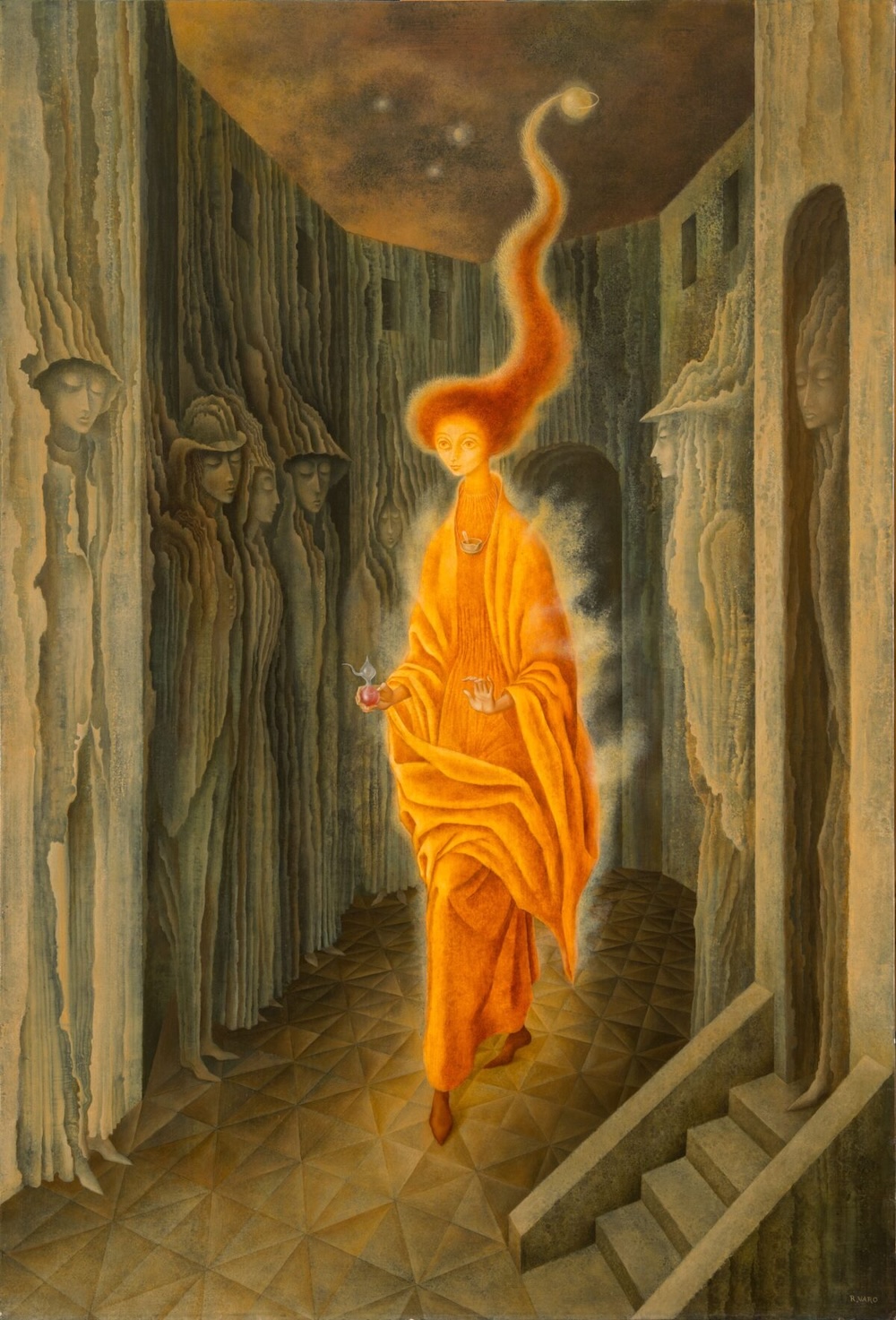
A woman, wrapped in a robe of light, walks down the corridor intently, on tiptoe. Shadows emerge from the walls — her predecessors on this path. They are silent. Their eyes are closed. Yet their presence fills the space, keeping the traveler from succumbing to loneliness. The woman’s hair rises like a flame toward the stars. She herself is like a spark. She is the one to join the ranks of the shadows when her journey is over.
The Call — a painting by the Spanish artist Remedios Varo — is my favorite. It reminds me of a life-changing experience of my own. Like Varo, I emigrated during the war. One thought saved me from falling into a panic on the evacuation train. A thought that was — and still is — my personal spark of light: I, my fellow travelers, and millions of other Ukrainians are not the first to emigrate to escape war. We are following in the footsteps of those who traveled this path nearly a century ago.
I have long been studying Ukrainian culture in exile in the first half of the 20th century. Back then, Ukrainian artists abroad were not only surviving but also enriching the world with their creative work. So, on the evacuation train, I imagined scenes from drawings by Oleksandr Arkhypenko — the central figure of my research — and, as if telling the beads, went through fragments of emigrants’ memoirs published by Chervona Kalyna. All those people from the past were like shadows from Varo's painting. They couldn't call out to me, but I felt their presence. Their stories sustained me.
***
I first saw the artworks by Remedios Varo at the 2026 exhibition, In the Very Bowels of Changes: Surrealism and Antifascism, at the Museum of Modern Art in Warsaw. Through the pieces by surrealists from across Europe, the curators presented the struggle against authoritarian regimes — not with weapons, but with images and words. That struggle continued even in exile. The artworks by Ukrainian and Spanish surrealists, displayed side by side, seemed to be having a dialogue about ways of perceiving a reality shaped by the catastrophes of war.
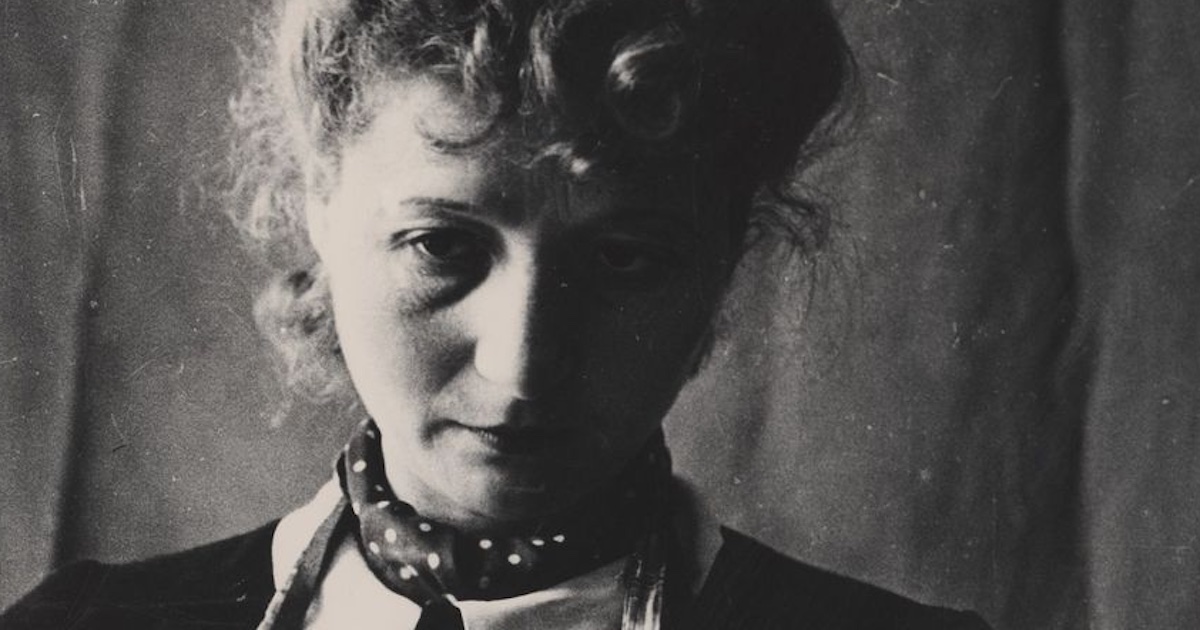
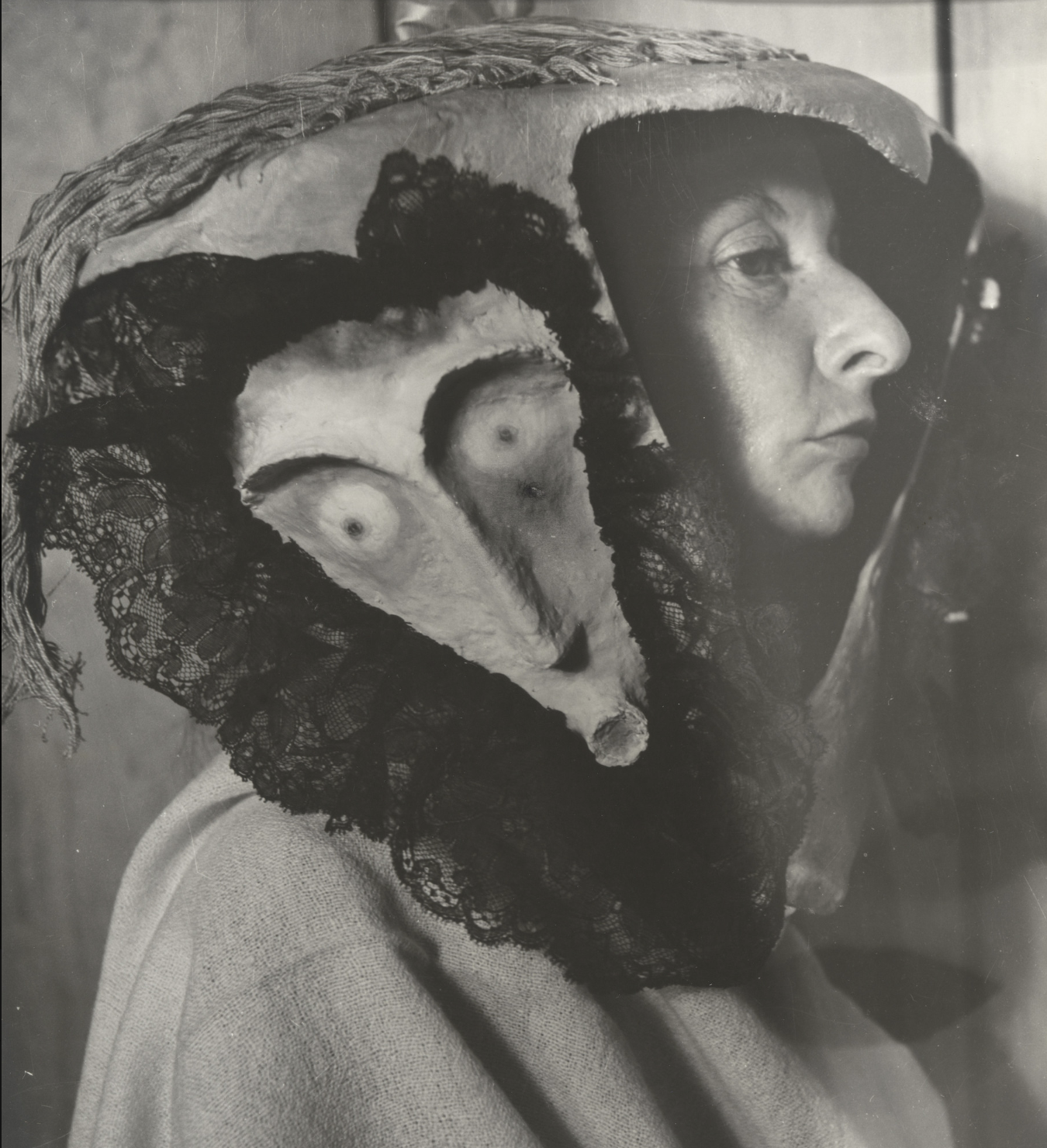
Not far from the famous portrait photograph of Ukrainian artist Margit Selska posing with an empty frame, a portrait photograph of Remedios Varo was on display in a composition featuring a mask that similarly framed her face in a unique way. Both photographs were taken by friends of the artists, Alexander Krzywobłocki and Kati Horna, respectively.
Friendship, relocation, and seeking warmth and peace — these are the key themes in the conversation about Remedios Varo’s life.
***
Remedios Varo studied at the Royal Academy of Fine Arts of San Fernando in Spain and received a degree in art education in 1930. However, this degree meant little in Madrid’s conservative art scene and was of no help to the young artist’s career as she sought her own style. While still a student, Varo met the surrealists at the Student Residence, where leading figures at the time were Lorca, Dalí, and Buñuel. The artist became interested in their ideas.
Varo first visited Paris in 1931 with her first husband, the artist Gerardo Lizarraga. The following year, they returned to Spain and settled in Barcelona, where they joined a circle of young avant-garde artists. Some of her friends there, including Esteban Frances and Óscar Domínguez, would stay in touch with Varo after she emigrated. Unfortunately, the artist’s works from that period were destroyed during the war.
During the civil war, in 1936, Varo met Benjamin Péret, a French poet who had come to Spain to fight in the International Brigades. The artist supported the Republicans: the surrealists, who valued freedom and self-expression, condemned colonialism and fascism. Varo and Péret began an affair, and in 1937 they left for Paris together.
There, Varo met the surrealists grouped around André Breton. During that period, her creative work was heavily influenced by her environment and circumstances; because of her financial hardships, the artist took on occasional commercial commissions. Her fellow artists often perceived her as a “femme-enfant” — an enigmatic young muse. Her talent and convictions were more of an additional feature to the image of a charming companion. According to André Thirion, Varo felt “as if she were being tested” at Breton’s gatherings.
She managed to change that role only in Mexico. However, her path was not easy. In 1939, Franco’s government banned anyone associated with the Republicans from returning to Spain. Varo found herself cut off from her family. Her younger brother Luis, who had been drafted into Franco’s army, was killed. When World War II began, the artist faced deportation from France. In 1940, Perét was imprisoned for his communist beliefs, and Varo was detained for several months for her relationship with him.
The artist left no written record of that experience. However, her paintings began to feature unsettling motifs of high, windowless walls and cramped spaces evoking claustrophobia. There was also the haunting image of the rheumatic pain that tormented the artist for the rest of her life. After her release, Varo found out that Lizarraga was in an internment camp and managed to get him freed. In late 1940, Varo, Perét, Lizarraga, and many of their friends — all of whom were like-minded colleagues — escaped to Marseille. For several months, they were hiding from the Gestapo in an abandoned villa, living in hunger and poverty. Eventually, with the assistance of Varian Fry’s Emergency Rescue Committee, they managed to flee. That is how Varo ended up in Mexico.
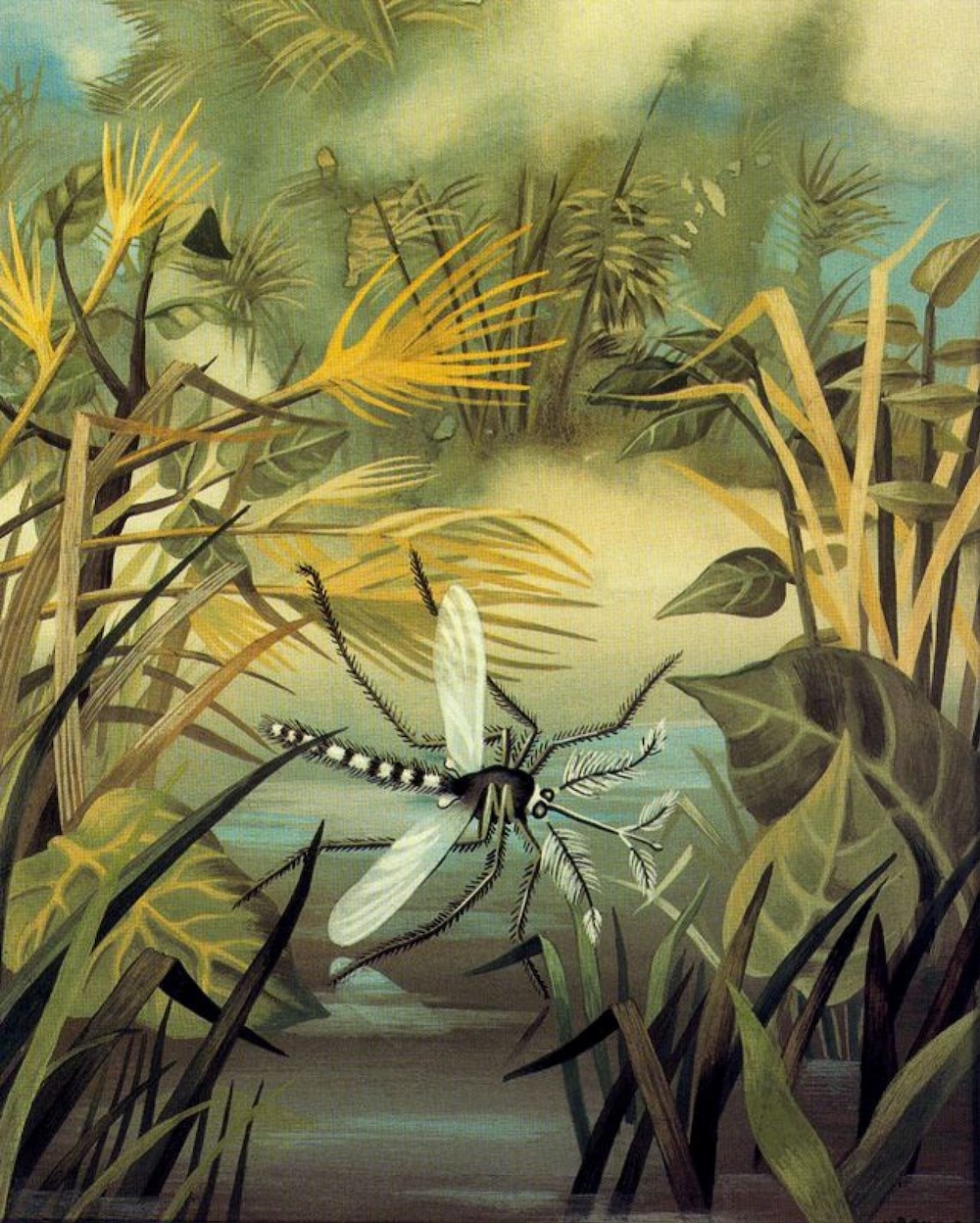
That's where the artist started building a new life from scratch. At first, she earned a living designing commercials for the pharmaceutical company Bayer; she traveled with an epidemiological expedition to Venezuela, where she painted malaria-carrying mosquitoes on commission from the ministry of health. Around that time, she found out that her mother and older brother, Rodrigo, had fled the Franco regime. Perét returned to France in 1947. Varo stayed in Mexico City, where she got to know local artists. But what gave her the most support was connecting with other emigrants, with whom she shared a common experience.
It seems that for Remedios Varo, her surroundings were more important than her location. However, her diary has the following entry: “I arrived in Mexico seeking the peace I had not found in Europe because of the turmoil there — for me it was impossible to paint amidst so much uneasiness.” Similar aspirations guided the Hungarian-born photographer Kati Horna, who documented the Spanish civil war, and the English artist Leonora Carrington, who had met Varo earlier in Paris. Both had fled Nazi persecution.
Thanks to their friendship, a small, mystical artistic world arose. The three artists lived next to each other in the La Roma neighborhood and met every day. They were fascinated by the evolution of consciousness, shared their dreams, invented recipes for “kitchen magic,” and practiced meditation. Their friends joked that they were the “three witches.” The artists also created masks, costumes, and dolls inspired by Mayan and Aztec folklore. They staged performances with them to entertain their friends and local art lovers. They believed that creativity should be spontaneous and make people smile.
Varo’s personal story was expressed through artistic language. Her hardships turned into images. Over ten years, the artist gradually gained popularity. The artworks from her solo exhibitions in 1956 and 1962 sold out quickly.
Varo found a true ally and intellectual partner on her new path in her second husband, Walter Gruen — an Austrian Jew who had survived a concentration camp, lost his family, and emigrated overseas, where he eventually became the owner of a music store. She dedicated several paintings to him, encoding musical symbols within them, and depicted him as a sage who “plays with the meaning of music.”
After the artist’s sudden death — from a heart attack — in 1963, Gruen took care to protect and promote her legacy. He preserved her diaries and sketches and compiled catalogs of her artworks, which he purchased from private collectors to create a comprehensive memorial collection.
***
Remedios Varo wrote: “I am more from Mexico than from any other place. I know little of Spain; I was very young when I lived there… It is in Mexico that I felt welcomed and secure.” However, this does not mean that Spain has no place in her art. On the contrary, a Spanish context is clearly evident in Varo's paintings.
As a child, Remedios attended a Catholic girls’ school, which she did not like. Her father, an engineer, was the first to believe in his daughter’s talent; he gave her pencils and sketchbooks and taught her to draw. He encouraged her to approach religious dogma “in a philosophical way,” focusing on symbolic imagery.
That is why, in Varo’s paintings, monastic cells and religious buildings are sometimes depicted as prisons and sometimes as laboratories of creativity. In the painting Embroidering the Earth’s Mantle, young women perform intricate work under the supervision of a stern teacher with a hidden face. And in Creation of the Birds, a space resembling a monastery is the setting where, through music, colors, and the magic of the moon — all brought together by an enchanting creature — birds are born to symbolize the free spirit.
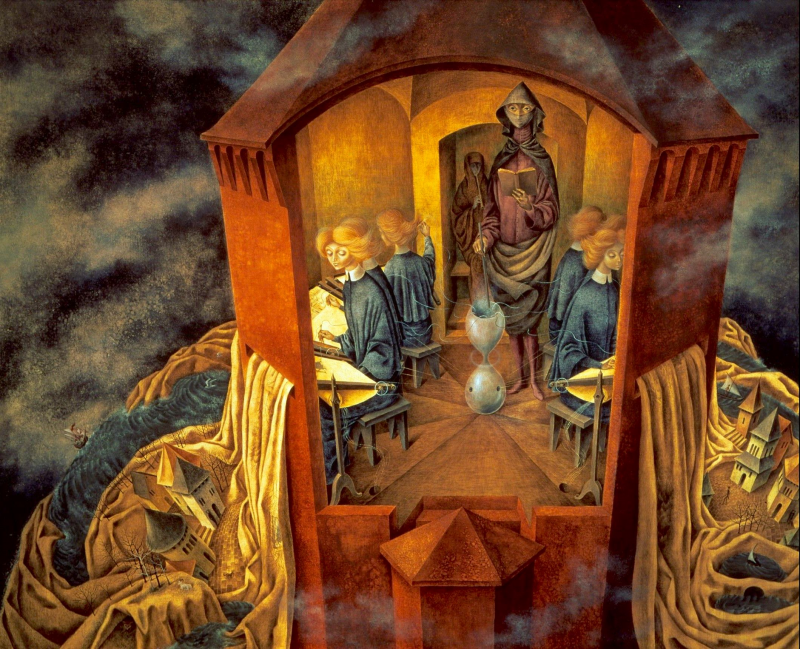
Although Varo became an atheist, she maintained a lifelong interest in medieval alchemy and philosophy. Her mysticism, with its themes of spiritual brotherhood and shared intellectual endeavor, is not a Catholic tradition but a personal interpretation. The artist also reinterpreted the religious subjects in the works of El Greco, Zurbarán, Velázquez, and Goya.
“I do not wish to talk about myself because I hold very deeply the belief that what is important is the work, not the person,” Remedios wrote in her diary. Work was her main anchor in life.
Emigration gave Varo a new perspective. The hardships she endured inspired the artist to be bolder and share her thoughts with the world. In Mexico, having found a comfortable setting for her creative work, Varo developed her own artistic language — one that was expressive and metaphorical — allowing her to avoid confronting pain directly.
A biography always has its origins. Even if they aren’t explicitly mentioned, those origins are embodied in the artist’s creative work — in the choice of themes, images, and symbols. Remedios Varo’s paintings do not explicitly describe her turbulent youth, exile, or the war. But all of this is there, hidden within metaphors.
I think this is what makes an artist happy: they carry a whole world within themselves — a world that can serve as both a refuge and a source of healing. And creative practice allows them to build a home out of it.
Translated from Ukrainian by Tetyana Rodionova